
There is so much I could say about Vienna, which is one of my favorite cities in Europe. So much, in fact, that one post is not nearly enough to convey all of my thoughts, so here I’m going to focus on one particular aspect of Vienna: its café culture.
When you think of café culture in Europe, Paris – or France more generally – probably comes to mind. In movies or TV shows, people sit in quintessential Parisian cafes, sip their coffee, and eat croissants. Not having been to Paris, I can’t comment on how accurate this image actually is. However, what I can say is this: Paris is not the only European city with a distinct café culture. Vienna has one, too.
The birth of café culture in Vienna is commonly said to date to the Ottoman siege of Vienna in 1683. After their defeat at the hands of the Habsburg army, Ottoman soldiers allegedly left behind sacks of coffee beans. According to the story, an enterprising Habsburg officer experimented with the beans, roasting them, adding sugar and milk, and, deciding the product tasted pretty good, opened the first coffeehouse in Vienna. Whether or not all of the details of this story are true, coffee caught on in Vienna, and coffeehouses popped up throughout the city.
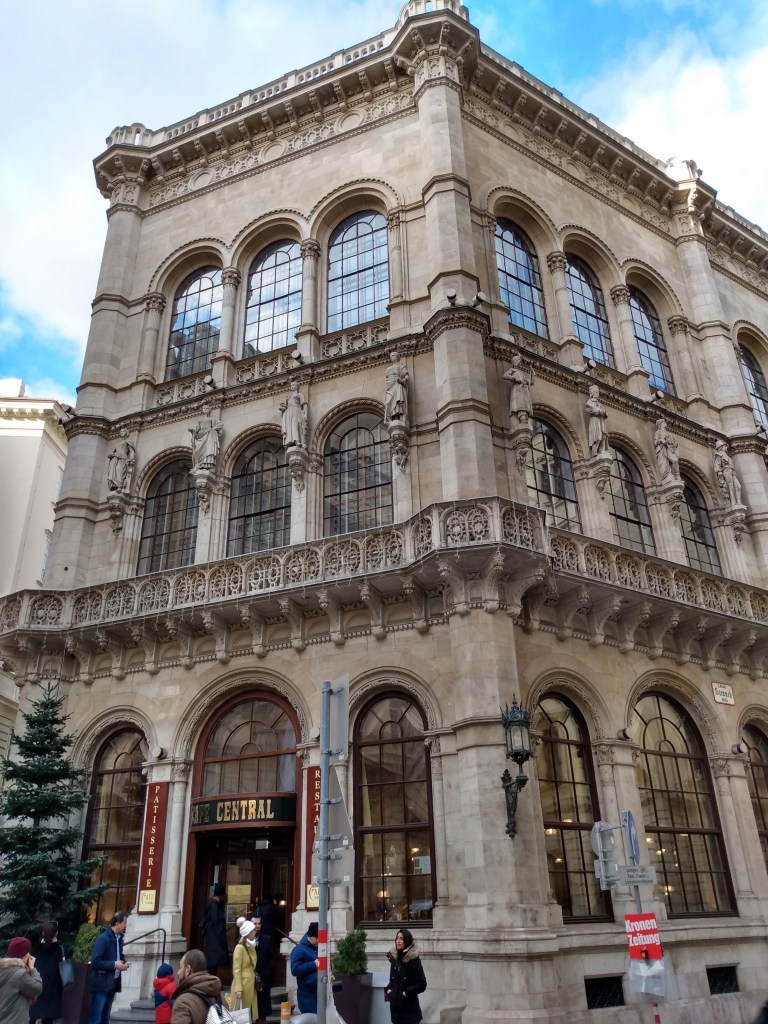
The real heyday of the Viennese coffeehouse came in the nineteenth century, when intellectuals, writers, artists, and politicians decided they enjoyed the atmosphere of coffeehouses and began meeting, discussing ideas, and working in them. Famous patrons of Viennese coffeehouses include Sigmund Freud, Arthur Schnitzler, Stefan Zweig, Egon Schiele, Gustav Klimt, Theodor Herzl, and even Leon Trotsky. Notable coffeehouses include Cafe Landtmann (which claims to have been Freud’s favorite); Cafe Central; Cafe Sacher (where the famous Sachertorte was invented); and Demel (which bridges the line between coffeehouse and pastry shop).
The key aspects of Viennese coffeehouse culture are a variety of coffee drinks, nearly always served with a glass of water on the side; a selection of pastries or cakes to munch on; and a stack of newspapers to read. Also important is the fact that customers can linger as long as they wish, reading the newspaper, talking, or working (just like the intellectuals of days past).
As someone studying cultural heritage management, I was interested to learn that Viennese coffeehouse culture has been officially designated a form of intangible cultural heritage by the Austrian commission for UNESCO. In case you’re curious, UNESCO defines intangible cultural heritage as practices, representations, and expressions which groups recognize as part of their cultural heritage, in contrast to tangible heritage (physical objects and artifacts).
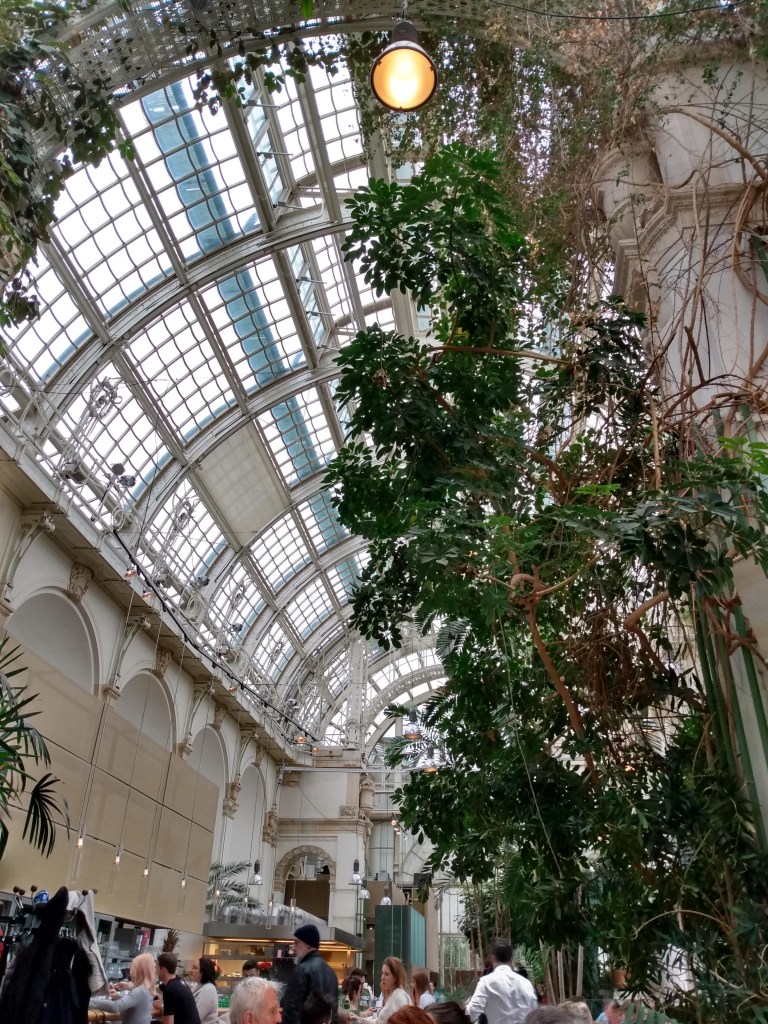
During my recent visit to Vienna over Christmas, I (of course) participated in the Viennese coffeehouse culture. One day, we went to the Palmenhaus cafe, which is located in a former greenhouse built for the Habsburgs (yes, a royal greenhouse!). Part of the sprawling Hofburg complex, the Palmenhaus has a great atmosphere. How can you not feel classy in a cafe that used to be part of a palace?

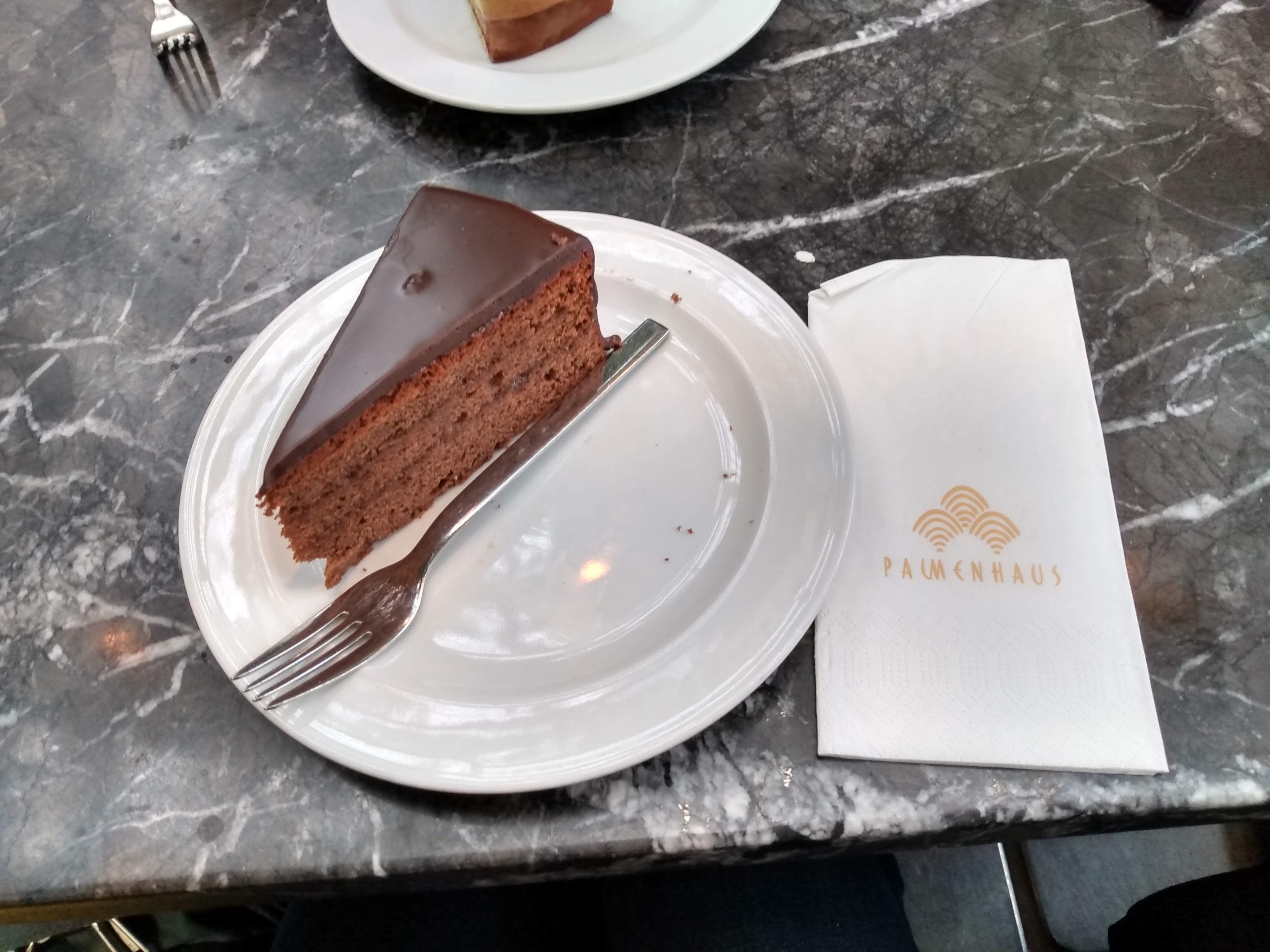
At the Palmenhaus, I savored two Viennese classics: a slice of Sachertorte and a melange. Invented at the Hotel Sacher (and now consumed all over Vienna), Sachertorte is chocolate cake topped with, first, a layer of apricot jam, then a layer of chocolate icing. A melange is a classic Viennese coffee, basically the Viennese version of a latte (except both stronger and better than what you get at your local Starbucks). At a different cafe, I tried another Vienna classic: Esterhazy torte. Named after a prominent Hungarian aristocrat and Habsburg diplomat, Esterhazy torte is composed of layers of almond sponge and buttercream, topped with a fondant glaze with chocolate stripes. Both Sachertorte and Esterhazy torte are very rich, but yum! It’s hard to find fault with either of them when it comes to taste.


I hope you enjoyed this quick look at Vienna’s café culture. Now, you can join me in craving a melange and a slice of Sachertorte!



 Making the Past Present
Leave a comment