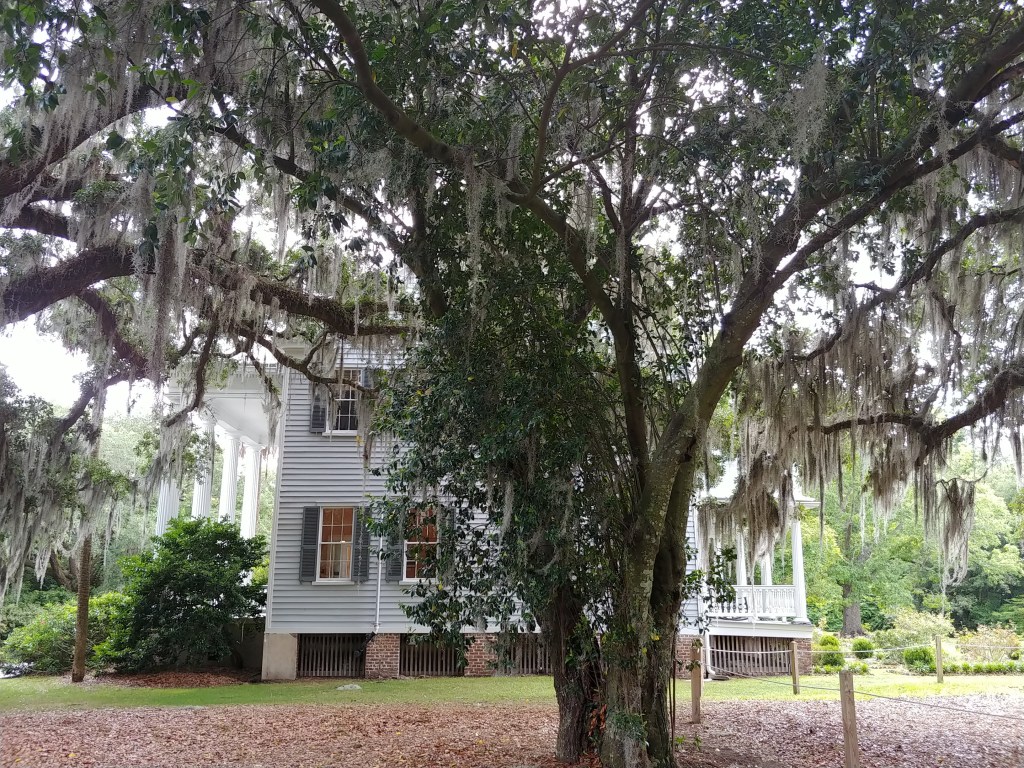
Recently, I spent a few days in the Charleston, South Carolina, area. In between relaxing at the beach and exploring downtown Charleston, I visited a new (to me, at least) historic site: McLeod Plantation Historic Site. Located on James Island, just a few miles from downtown Charleston on the way to Folly Beach (see map below), this historic site puts a particular emphasis on interpreting the history of Reconstruction and the African American struggle for civil rights after the Civil War. I chose to visit McLeod Plantation in part because of its interpretive focus on the Reconstruction period. This differs from other Charleston-area plantation sites that I’ve visited, which seemed to me to emphasize Old South nostalgia over critical interpretation. (Although, that may have changed in the several years since I’ve visited sites such as Middleton Place, Magnolia Plantation, or Boone Hall.) My visit to McLeod Plantation Historic Site was certainly interesting, leaving me to contemplate the ways in which history is remade for various purposes and the difficulties of interpreting Reconstruction.
History, Remade
As you approach the former plantation house at McLeod Plantation, walking down an avenue of live oak trees with Spanish moss dangling down from their branches, you might feel as though you’ve been transported into a scene from Gone with the Wind. The front entrance of the plantation house confirms this feeling, as with its white-columned portico, it is an excellent example of antebellum Greek Revival architecture. Or is it?
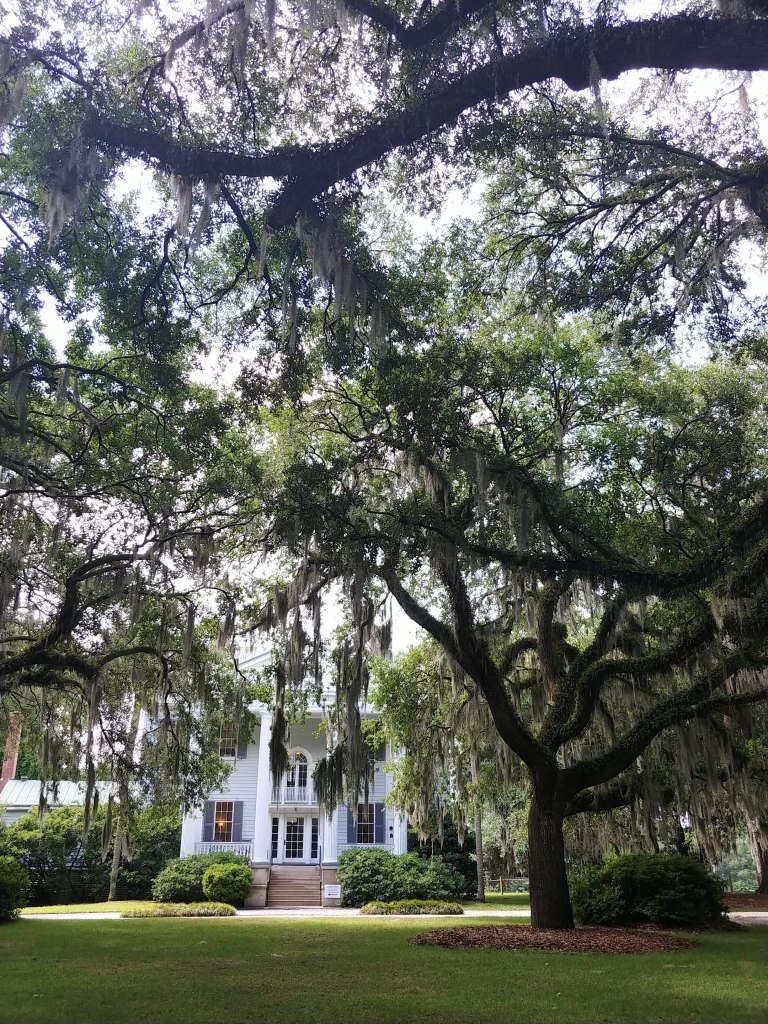
In reality, the front façade of the McLeod house is just that – a façade. The whole exterior appearance of the home was created purposefully by the McLeod family in order to rewrite the history of their plantation. As I learned during my guided tour of the plantation, the Gone with the Wind-esque façade is not the original entrance to the home, nor was the house originally built in the Greek Revival style. In fact, the Greek Revival front façade was only created in the 1920s, decades after the Civil War. The current rear of the house, which used to be the front entrance, provides a more accurate view of what McLeod Plantation looked like in the 1850s and 1860s. At this point, you may be wondering, as I did during my tour of the plantation, why the McLeod family changed the appearance of their home so radically. The answer, according to my tour guide, lies in the myth of the Lost Cause.

Created after the Confederacy’s defeat in the Civil War and immensely popular among white Southerners during the late 19th and 20th centuries, the myth of the Lost Cause is a (completely wrong) reinterpretation of antebellum and Civil War history. Key aspects of the Lost Cause myth include the argument that the Confederate cause during the Civil War was heroic and just; that the Confederacy fought the Civil War to defend states’ rights and the Southern way of life, not to preserve the institution of slavery; that the Confederacy’s greater military skill and courage in battle was overwhelmed by the North’s numerical superiority and greater industrial capacity; and that Southern slavery was a benevolent institution, with kind masters and happy enslaved people. As the myth of the Lost Cause developed and grew in popularity in the late 19th century, it shaped the way in which generations of white Southerners remembered the antebellum period, slavery, and the Civil War. Even in the twenty-first century, the myth of the Lost Cause still influences the way in which the Civil War is remembered by many people in the South (see: Confederates in the Attic by Tony Horwitz).
What does the Lost Cause myth have to do with the architectural transformation of the McLeod house in the 1920s? As my tour guide explained, the McLeod family sought to cover up the true history of McLeod Plantation by altering the appearance of the main house and the surrounding landscape. The avenue of live oaks was planted in order to screen the main house from the rest of the plantation, where the work of slavery had occurred. With the trees in place, the other structures on the plantation, such as the former cotton gin house, couldn’t be seen, allowing the McLeod family to distance themselves from – to forget – the ways in which those structures had been used and who had worked in them. Similarly, the new Greek Revival entrance was created in order to make the house look more stately – more like a country estate than a former working plantation house.

With these changes to the architecture of the McLeod house and its surrounding landscape, the legacy of slavery at McLeod Plantation was relegated to “out of sight, out of mind.” If the McLeods – and their visitors – couldn’t see the physical reminders of the plantation’s past, it was much easier to pretend that slavery had been benevolent, rather than a violent, exploitative institution practiced in full view of everyone on the plantation, including those living in the main house. By changing the appearance of their house, the McLeods attempted to remake the history of their plantation, so that it would fit in with the ideology of the Lost Cause. The McLeods transformed their home in order to make it look like the entirely-imagined archetype of the Southern plantation house, all in the service of rewriting history, supporting the Lost Cause narrative, and, most damagingly, denying the brutal realities of slavery.
Interpreting Reconstruction
Today, McLeod Plantation Historic Site is attempting to rectify the omissions of the past by focusing its interpretation on the Reconstruction period and the experiences of African Americans during what the site calls the “transition to freedom” after the Civil War. However, while I found the information about the rewriting of history at McLeod Plantation in the 1920s to be fascinating, I thought that the interpretation of Reconstruction at the site was a bit disappointing. Certainly, interpreting Reconstruction is difficult, due to the complexity of the period from 1865 to 1877 and the fact that many visitors to Reconstruction-era sites, such as McLeod Plantation, don’t have any background knowledge on Reconstruction. To paraphrase my tour guide, Reconstruction is one of the periods that is most important for understanding the United States today, yet few Americans know anything about this period. Reconstruction (a timeline of which you can find here) was an experiment, an attempt to remake the South which succeeded for a few years, but ultimately failed due to a combination of growing Northern unwillingness to defend the rights of African Americans in the South and the determination of white Southerners to overthrow the new social and political order.
My guide at McLeod Plantation engaged with many of the major developments and issues of the Reconstruction Era, such as the federal government’s efforts to support formerly enslaved people in the South through organizations such as the Freedmen’s Bureau; attempts to secure Black landownership and voting rights in the South; and the return to power, often through violence, of white Southerners and the subsequent creation of Jim Crow laws. However, the guide’s discussion of these topics mainly took place at the “macro” level, recounting the events of Reconstruction and the challenges Black people in the South faced during this period in general terms. He only occasionally connected this history to the people who actually lived at McLeod Plantation. For example, he mentioned several times an enslaved couple who lived at the plantation throughout the Civil War as he talked about the Confederate occupation of the plantation and subsequent arrival of Union soldiers toward the end of the war. But when he reached Reconstruction, he didn’t continue the story of this couple – who continued to lived on the plantation after the war – in any kind of detail. A story such as this, of formerly-enslaved people who experienced the “transition to freedom” on the very spot that we were standing, could have greatly enriched the site’s interpretation of Reconstruction by connecting personal and local experiences to national history.
At the end of the tour, I felt as though I had learned about the history of Reconstruction – something that I could have done anywhere by reading about the period – without gaining any of the “human factor,” the stories of people’s lives and experiences that enrich history and are usually an integral part of interpretation at historic sites. Certainly, the stories of many of the enslaved and freed people who lived at McLeod Plantation are unknown due to “silences” in the historical record, to use Michel-Rolph Trouillot’s phrase. But, as the example above demonstrates, some of these stories are known. So why not foreground the Black stories that are known, while attempting to uncover the stories of other enslaved and freed people who lived at McLeod Plantation?
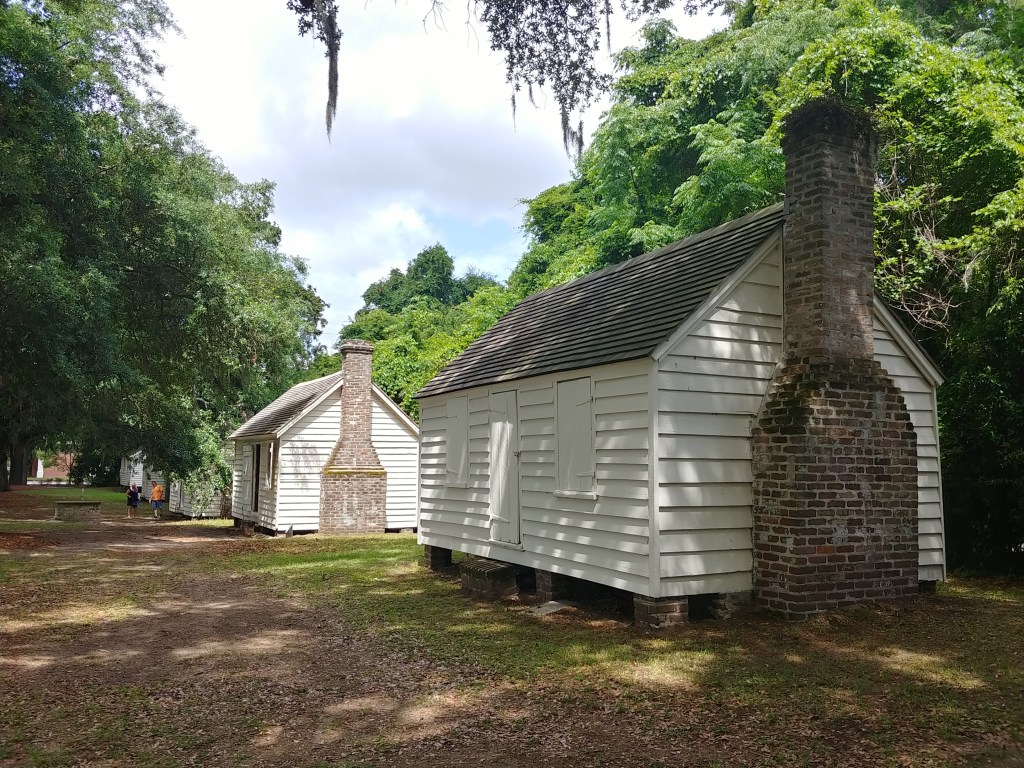
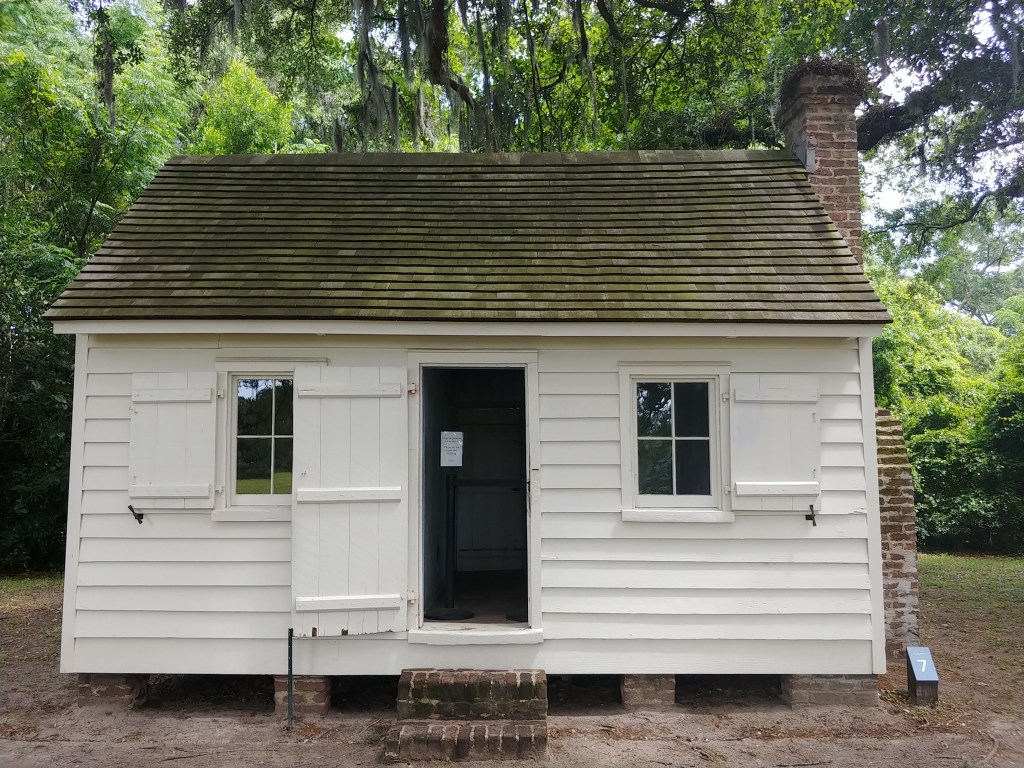
One place where Black stories could be better interpreted at McLeod Plantation is the area that the site calls “Transition Row,” a series of cabins that once housed the enslaved and freed people who lived on the plantation. According to the site’s brochure, these buildings are supposed to illuminate the experiences of the enslaved people “whose refusal to submit to the dehumanizing condition of slavery contributed to the creation of Gullah culture;” the freed people who continued to live on the plantation after the Civil War; and their descendants, some of whom lived in these cabins (which lacked modern conveniences) until the 1990s. When I visited McLeod Plantation, these buildings lacked any kind of interpretation beyond a few signboards. The cabins are empty, with nothing to distinguish the “tenant home” from the “home of enslaved” or “worship house.” I could not draw on the tour guide’s interpretation to learn more about these buildings, as he did not take the group into this area. At the end of our tour, we were directed to explore these buildings on our own, but without more detailed interpretation, what could we learn?
All in all, at the end of my visit to McLeod Plantation Historic Site, I felt that I had learned more about the McLeod family, their experiences, and their vision of the plantation than I had about lives and experiences of the enslaved and freed people who also lived on the plantation and whose stories have much to tell us about the realities of slavery and the troubled “transition to freedom.” This being said, I applaud the site for striving to interpret the difficult history of slavery and Reconstruction, and I hope that it continues to refine and develop its portrayal of slavery and Reconstruction, both of which shaped the history of the modern United States.



 Making the Past Present
Leave a comment