The Romans ruled large parts of the island of Great Britain for nearly four hundred years, from 43 CE to around 410 CE. As Roman control expanded across what is now England and Wales, the Romans left their mark on the British landscape. Perhaps the most famous Roman site in Britain is Hadrian’s Wall, begun in 122 CE on the orders of the Emperor Hadrian, which defended the northern frontier of Roman Britannia from the Picts living in what is now Scotland. However, Hadrian’s Wall is not the only Roman site in Britain – far from it, actually. In many cities and towns across England, you can find traces of the Roman occupation of the island. Below, I’ve highlighted a few of these places, so that you too can set out on the trail of the Romans in Britain.
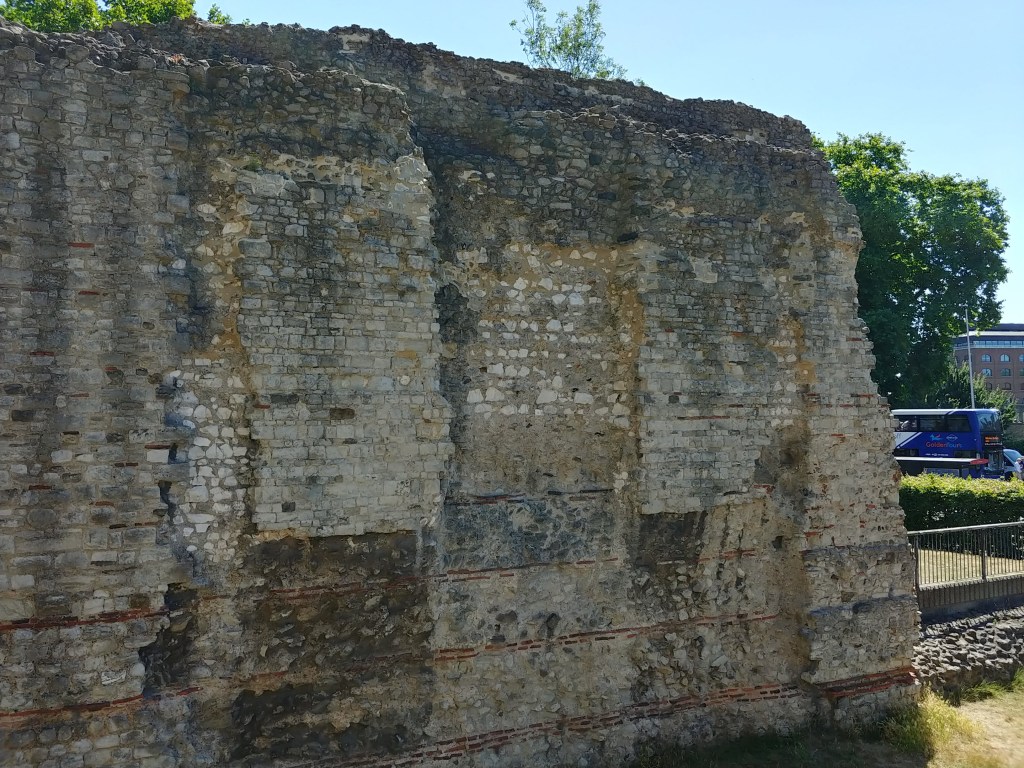
Initially, Roman occupation of Britain was centered in the southern part of the island; once the Romans consolidated their control in the south, they began pushing farther north around 70 CE. Londinium, better known today as London, was settled by the Romans around 47-50 CE, just a few years after the Roman invasion of Britain. Because of its location on the River Thames, Londinium became an important commercial center for the Roman province of Britannia. Although Londinium suffered a setback around 60 CE, when it was destroyed during Boudica’s rebellion against the Romans, the city was quickly rebuilt following Boudica’s defeat and thereafter expanded rapidly. Londinium was the largest city in Roman Britain, with perhaps 30,000-60,000 inhabitants, and the provincial capital from the second century CE until the end of Roman rule in Britain. However, in the second half of the second century, Londinium suffered another setback. Archaeologists have found evidence of a major fire that destroyed large parts of the city, which was rebuilt soon after, but never again reached its earlier height of population. While Londinium was a smaller city after the fire, it remained an important settlement, as evidenced by the fact that the Romans continued to invest in the city’s defense. Around 200 CE, the Romans constructed a defensive wall around Londinium, parts of which still stand today, having been incorporated into London’s medieval city wall.
Although they did not originate in Londinium, a unique set of Roman artifacts is currently on display in London. The British Museum holds the Vindolanda tablets, which are the oldest handwritten documents in Britain. These documents are written in ink on tablets made from wood and were discovered at the remains of the Roman fort of Vindolanda, which was located along Hadrian’s Wall, in 1973. The tablets survived due to unique soil conditions, as waterlogged soil preserved the tablets, which otherwise would likely have disintegrated, in rubbish deposits. While most of the tablets are official military documents, some are private letters sent to or from soldiers stationed at Vindolanda, including an invitation to a birthday party, providing invaluable evidence of Roman life in Britain.

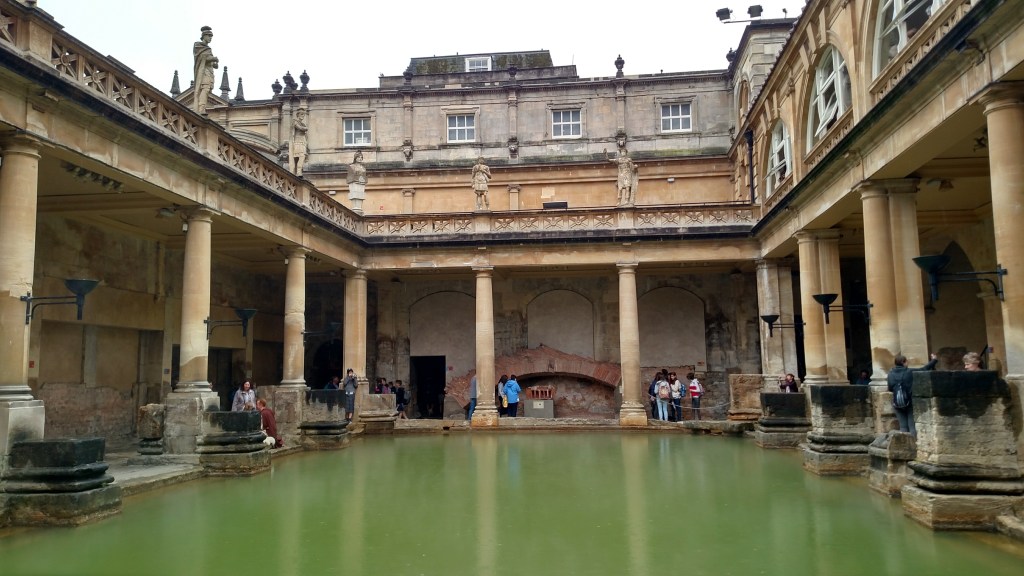
Aquae Sulis, or Bath, as it is called today, was a small town in Britannia, best known for its large natural hot spring and baths complex. The Romans began building a temple complex in Aquae Sulis in the 60s CE, having probably arrived in the area shortly after their invasion of Britain in 43 CE. The native British tribes living in the area knew of the hot spring, which they used as a shrine dedicated to their goddess Sulis. Combining aspects of the native British religion with their own, the Romans dedicated their temple to the worship of their goddess Minerva, or Sulis Minerva as she became known in Aquae Sulis. As the worship of Sulis Minerva developed, the Romans built a large bath complex adjacent to their temple. Similar to other Roman bath complexes, the baths at Aquae Sulis were comprised of many different areas, including the cold room, hot room, Great Bath, swimming pool, and the spring itself. After the Romans left Britain around 410 CE, the settlement at Aquae Sulis declined, and knowledge of the baths eventually faded. During the Elizabethan era, Bath (as it was now known) experienced a revival as a spa town. However, it was in the eighteenth and nineteenth centuries that Bath was probably best known as a spa town, as many aristocrats and other wealthy people came to Bath to take the waters. Jane Austen, who lived in Bath for several years in the early nineteenth century, featured the town in several novels, including Persuasion and Northanger Abbey. In the late nineteenth century, the Roman baths were rediscovered and opened as a tourist attraction in 1897.

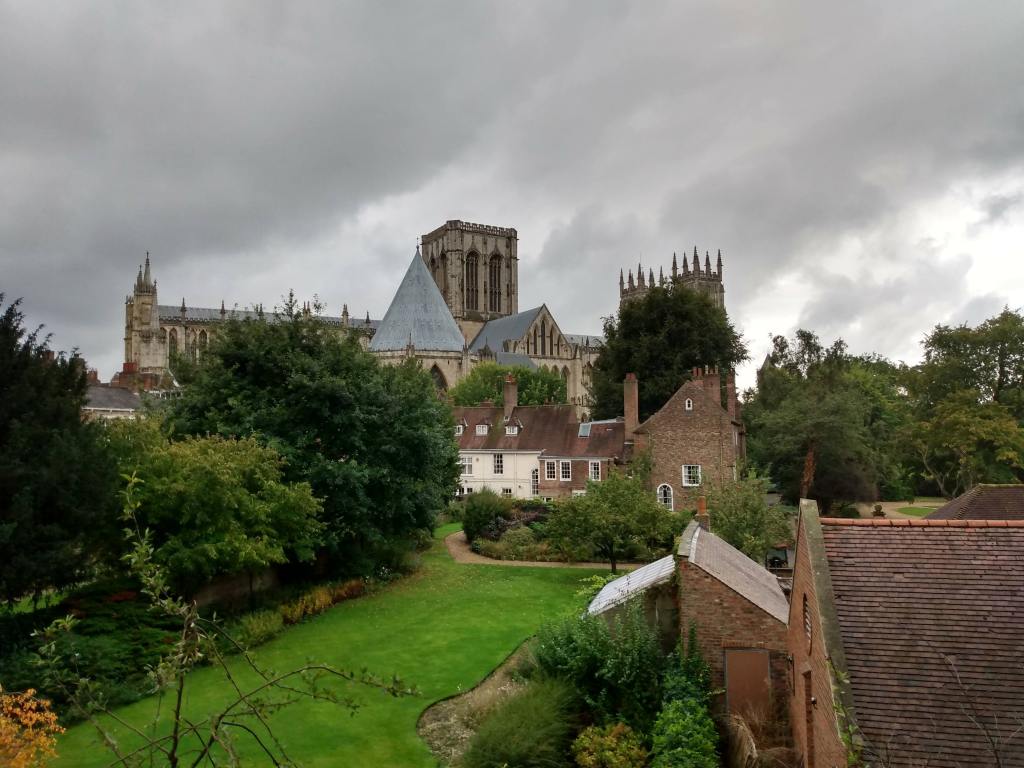
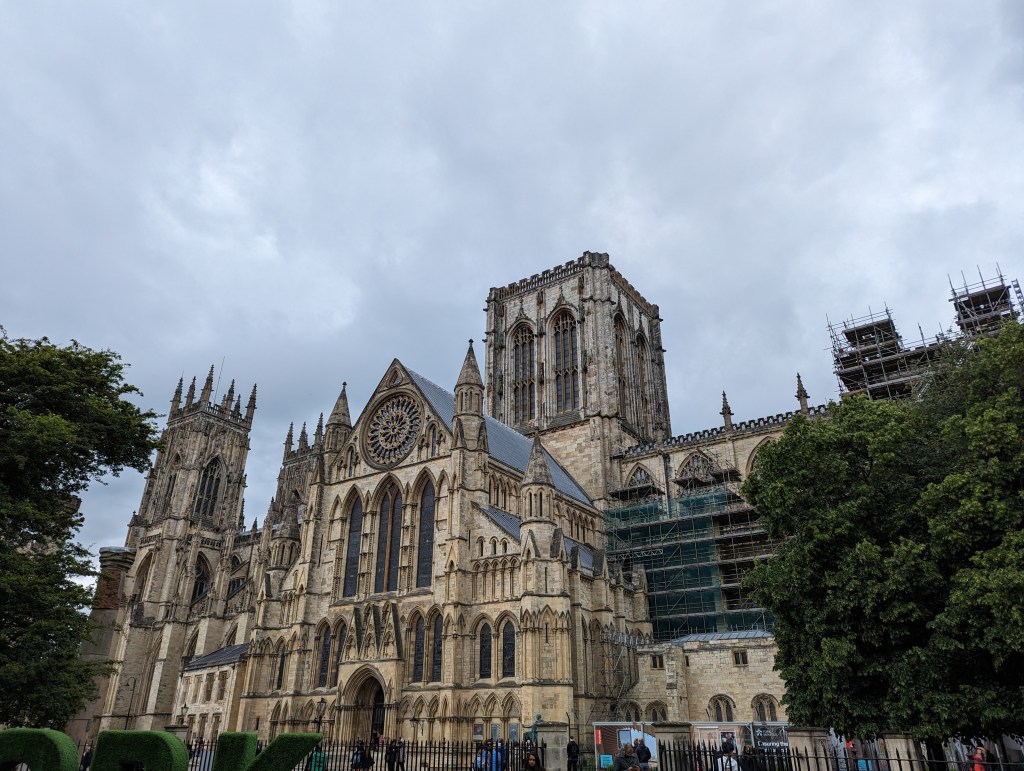
Eboracum, which regular readers of this blog will recognize as the Roman name for the city of York, was settled by Romans in 71 AD. Located at the confluence of the Rivers Ouse and Foss, Eboracum was an important fortress city for the Romans, especially for the defense of the northern frontiers of Britannia. The Roman settlement at Eboracum comprised two parts: the military fortress, on one side of the River Ouse, and the colonia (or civilian settlement) on the other side of the Ouse. Eboracum was visited by several Roman emperors, including Hadrian, Septimus Severus, and Constantius I. In 306 CE, Constantius I died during his visit to the city, and the Roman legion at Eboracum proclaimed his son, Constantine, emperor. In the late 1990s, a statue of Constantine was erected just outside York Minster to commemorate Constantine’s connection with York. Why was Constantine chosen for this honor, rather than one of the other emperors who visited Eboracum? Constantine was the first Roman emperor to convert to Christianity; he also proclaimed toleration for the religion in the Roman Empire. The statue thus highlights York’s Roman heritage, as well as the history of Christianity at York’s most important Christian site.
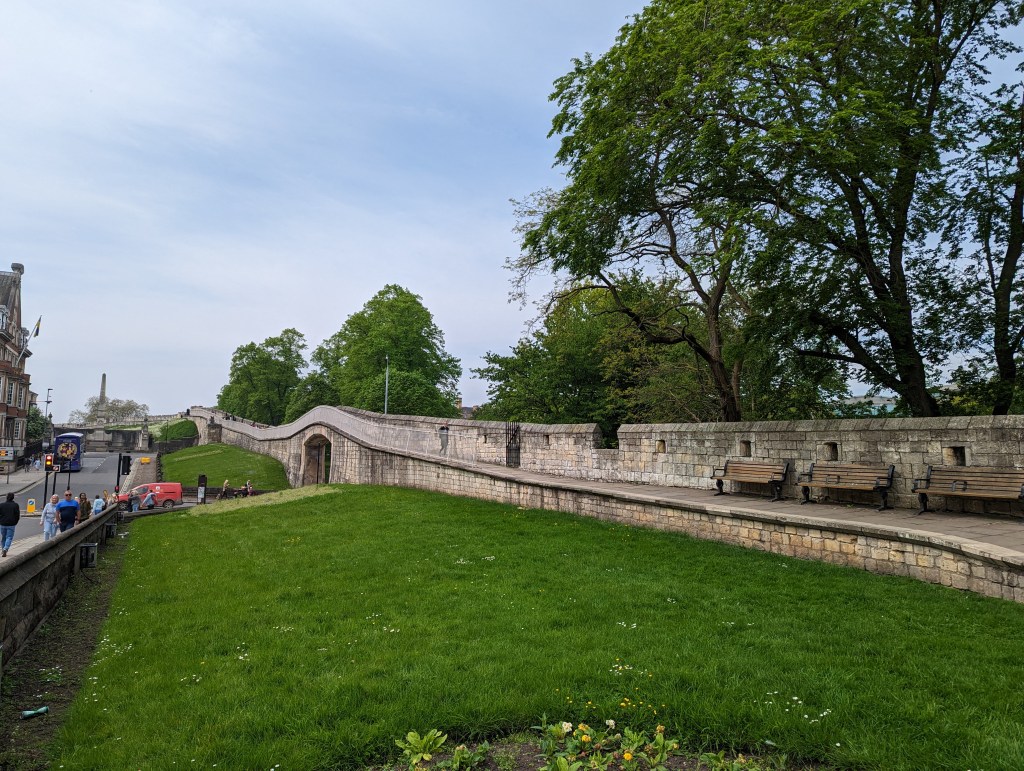
After the Romans withdrew from Britain around 410 CE, Eboracum disappears from the historical record for around two hundred years. A small settlement may have continued to exist, although archaeologists and historians do not know that for certain. Local inhabitants likely carried off Roman building materials for their own purposes in the post-Roman era. Indeed, most of Roman York is buried beneath the surface. The most significant Roman remains aboveground are a section of the Roman defensive wall, which was incorporated into the medieval city walls.

In the late 1960s, during extensive structural work on York Minster, the construction team discovered the remains of the north corner of the principia, or Roman military headquarters, underneath the Minster.
London, Bath, and York are not the only cities and towns in England with significant Roman heritage. Chester (Roman name: Deva), which is close to the English-Welsh border, has a number of Roman heritage sites, including the city walls, which were originally constructed by the Romans, and an amphitheater. There are also several Roman sites in Colchester (Roman name: Camulodunum), which claims to be the first city in England, including the city walls and the site of a Roman theater. Additionally, several of the forts along Hadrian’s Wall, including Vindolanda, and several Roman villas across England have been excavated and are open to visitors. I have not yet visited these sites, but they are on my list for future trips to England.
As a final note, anyone interested in a fictional depiction of daily life in Roman Britain should check out the Medicus series of mysteries written by Ruth Downie. The first book, Medicus, introduces the main character of Gaius Petreius Ruso, an unlucky Roman army doctor recently arrived in Britannia. Medicus – and the subsequent books – follow Ruso’s (often-involuntary) career as an amateur detective. Downie’s depiction of life in Roman Britain is vivid and based on careful research. Definitely worth a look if you are interested in the world of Roman Britain!



 Making the Past Present
Leave a comment