
Having gone to college in Knoxville (go Vols!), I know the basic outline of Knoxville’s history, especially regarding the Civil War. After all, much of the Battle of Fort Sanders in November 1863 took place on what is now the University of Tennessee’s campus and the nearby Fort Sanders neighborhood, named after the Union fort that the Confederates tried (unsuccessfully) to capture. Reflecting the proximity of this history to UTK’s campus, there was a Union regimental monument next to one of my dorms. As an undergraduate, however, I didn’t learn much beyond Knoxville’s Civil War history. Rather, I focused on as much as I could about European history, my chosen specialty. This focus meant that I missed learning about some of the finer points of Knoxville’s history, something that I’ve been trying to rectify each time I go back to Knoxville. So, when I decided to visit Knoxville for my fall break, I knew I wanted to see as many new-to-me places as possible.

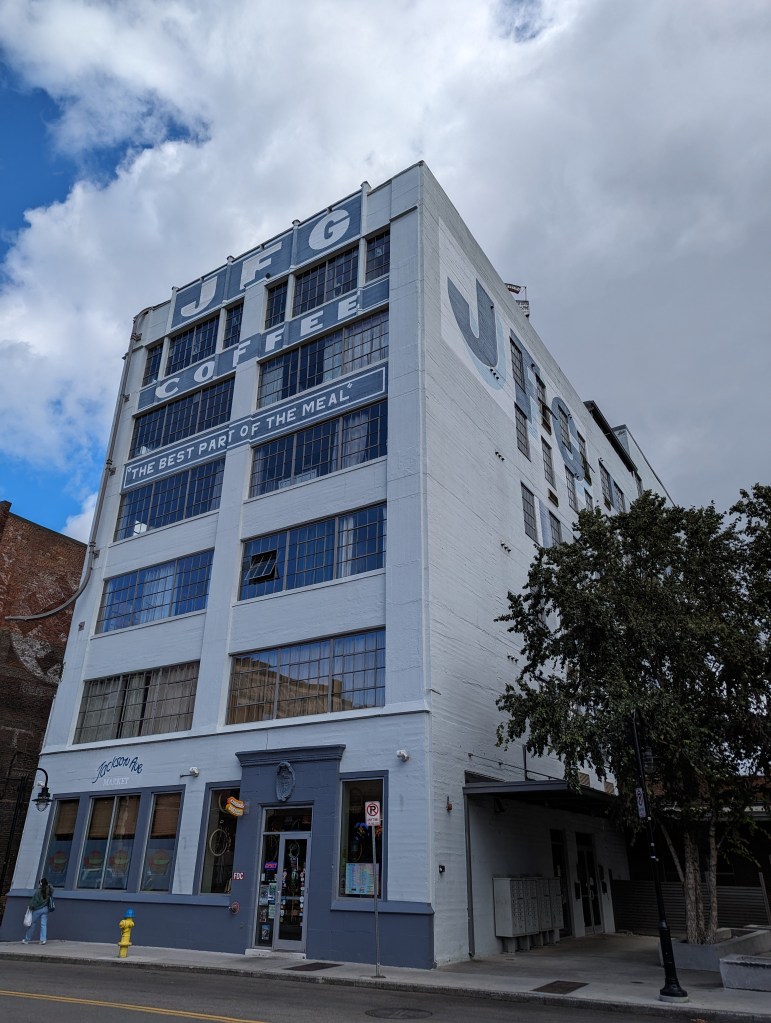
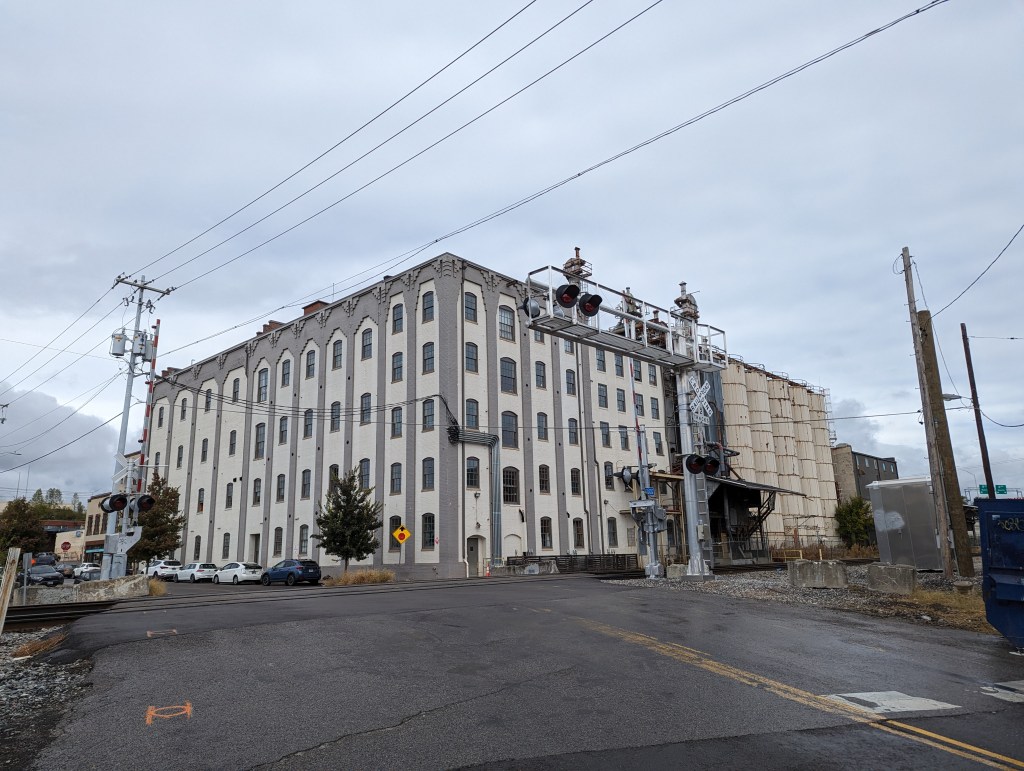
After stopping at a few familiar places (Market Square for lunch, Gay Street for the architecture), I set off to explore the Old City, a former industrial and commercial area just north of downtown Knoxville. The area’s history is easy to read in the urban landscape: the railroad still runs through the center of the Old City, and most of the historic buildings are former warehouses, railroad depots, and industrial buildings. Today, these buildings are prime examples of adaptive reuse, as they’ve been converted into mixed-use spaces, with shops, cafes, restaurants, and apartments and lofts (plus several bars for the undergraduates). The transformation of the Old City is definitely an example of the gentrification of downtown Knoxville and surrounding areas over the last several decades. Even when I was in college (which I like to think wasn’t that long ago), the Old City wasn’t quite as developed as it is today.

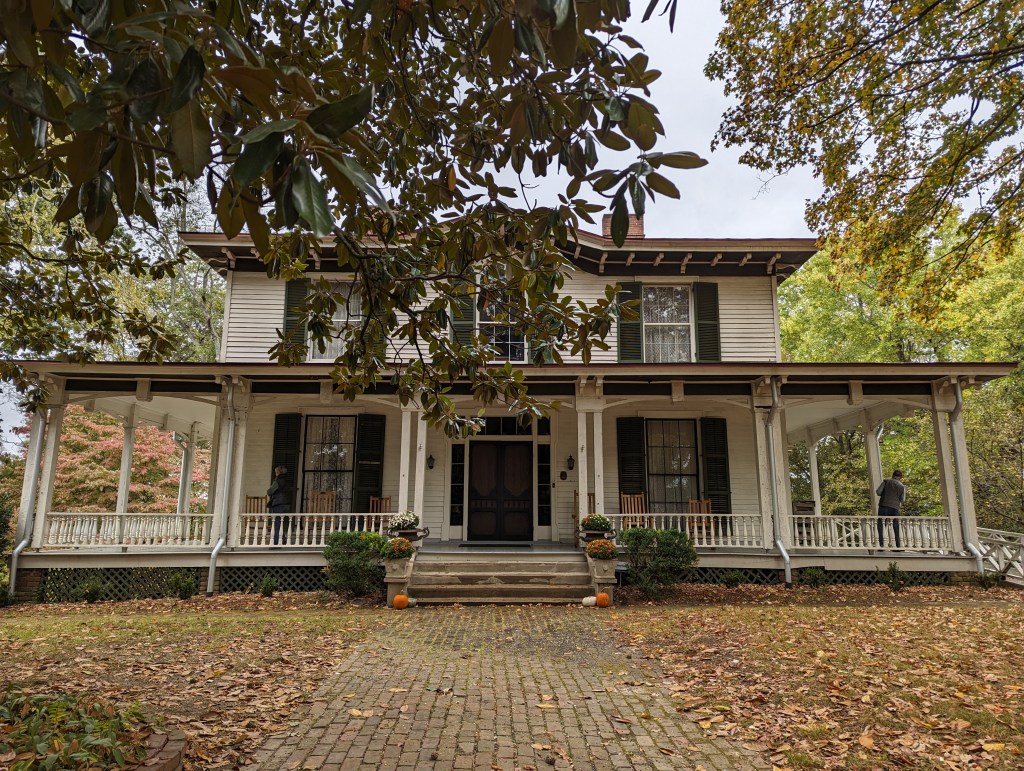
On my second day in Knoxville, I visited the Mabry-Hazen House, a historic house just east of downtown. Built in 1858, the house is one of Knoxville’s surviving antebellum homes. The house itself is interesting and well-furnished with pieces that are largely original to the home and the families who lived there, having been gathered by Evelyn Hazen, the home’s final resident. However, it was the story of the Mabry and Hazen families that most grabbed my attention. Joseph Mabry, who built the house, was a successful businessman in pre-Civil War Knoxville, with a variety of interests, including real estate, horse breeding, and the internal slave trade. During the Civil War, Mabry supported the Confederacy, pledging a good deal of his fortune to the cause, until Union forces arrived in Knoxville. The arrival of the Union caused Mabry to “remember” (that is, lie) that he had always been a Unionist and that he was happy to do business with the Union troops – a case of money before convictions.
After the Civil War, Mabry initially remained among the wealthy Knoxville elite; however, in the 1870s, a series of failed business dealings left him heavily in debt. In 1880, Mabry sold a parcel of land to Thomas O’Connor, a wealthy Knoxville banker, with the stipulation that part of the land would eventually be given to Mabry’s son Will. The next year, Will Mabry was killed in a barroom brawl, and O’Connor got to keep the land. Believing that O’Connor had arranged Will’s murder, Mabry entered into a feud with him. Everything came to a head in October 1882. After a confrontation between Mabry and O’Connor that nearly led to a duel, Mabry sent O’Connor a message, saying that he would kill O’Connor on sight. Two days later, O’Connor spotted Mabry walking down Gay Street, grabbed his shotgun, and killed Mabry. Hearing the commotion, Mabry’s son Joseph Mabry III rushed over. Seeing his father laying dead in the street, the younger Mabry grabbed his pistol and shot O’Connor, who, though mortally wounded, was able to fire one final shot, killing the younger Mabry. The tragedy, referred to as the “gunfight on Gay Street,” made national news; Mark Twain even recounted a version of events in Life on the Mississippi.
The death of the elder and younger Joseph Mabry left the Mabry family in financial straits, until Alice Mabry (the eldest daughter) married Rush Strong Hazen, a member of another wealthy Knoxville family. The house then passed into the Hazen family; the final resident was Evelyn Hazen, who died in 1987, after which the house became a museum. Continuing the family tradition of colorful figures, Evelyn Hazen had an interesting – and, for the time, scandalous – life. In the early 1930s, Evelyn sued her former fiancé, Ralph Scharringhaus, for breach of promise and seduction after they had been engaged for fifteen years (and Ralph continually found ways to put off their marriage). When Ralph broke off their relationship for good in 1932, Evelyn thought about murdering him, but decided on the suit instead. At trial, she was awarded $80,000, a huge sum at the time. However, the scandal of it all meant that Evelyn was drummed out of Knoxville high society; she never married and lived the rest of her life in the family home.
The other new-to-me historic site that I visited in Knoxville was James White’s Fort, which is less of a fort in the fortified military compound sense and more of a fortified frontier house compound. James White was a Revolutionary War veteran from North Carolina who moved across the mountains to what is now Tennessee after the war to claim land. In 1786, he built the first house in what would become Knoxville and surrounded it with a defensive palisade – hence, James White’s Fort. White is primarily remembered today as the founder of Knoxville. After the fort was chosen as the capital of the Southwest Territory in 1790, White donated the land that would become Knoxville in 1791. His descendants played a prominent role in politics and economic life in Knoxville throughout the 19th century; for instance, his son, Hugh Lawson White, became a U.S. Senator and Whig presidential candidate in 1836. James White’s son-in-law, John Overton, co-founded the city of Memphis and was a prominent lawyer, judge, and slave trader in Nashville. The playwright Tennessee Williams is also a descendant of James White.
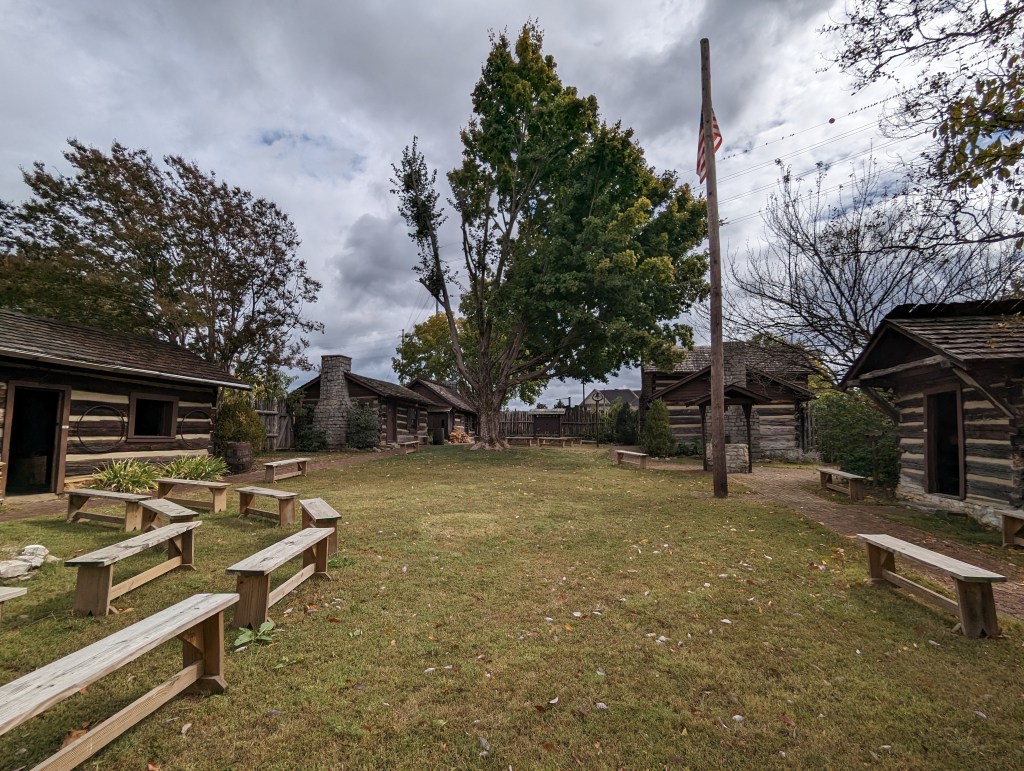
White’s frontier compound comprised the main house (where his family lived), an attached kitchen, and smaller cabins where guests would stay and the work of a frontier family was done, including preserving meat, making cider, spinning and weaving, and blacksmithing. As it stands today, James White’s Fort is a reconstruction that dates from the late 1960s and early 1970s. The main cabin itself is original, but it had to be brought back to Knoxville after having been moved elsewhere to form the basis of a larger house. The fort also does not sit on its original site. White built his fort in what is now downtown Knoxville, near the intersection of State Street and Clinch Avenue. Since the original site of the fort was unavailable, and (according to an employee I spoke to at the site) Knoxville’s leaders didn’t want anything “old” downtown, the reconstruction of James White’s Fort had to be located just outside downtown on Hill Avenue, across from what is now the Women’s Basketball Hall of Fame.
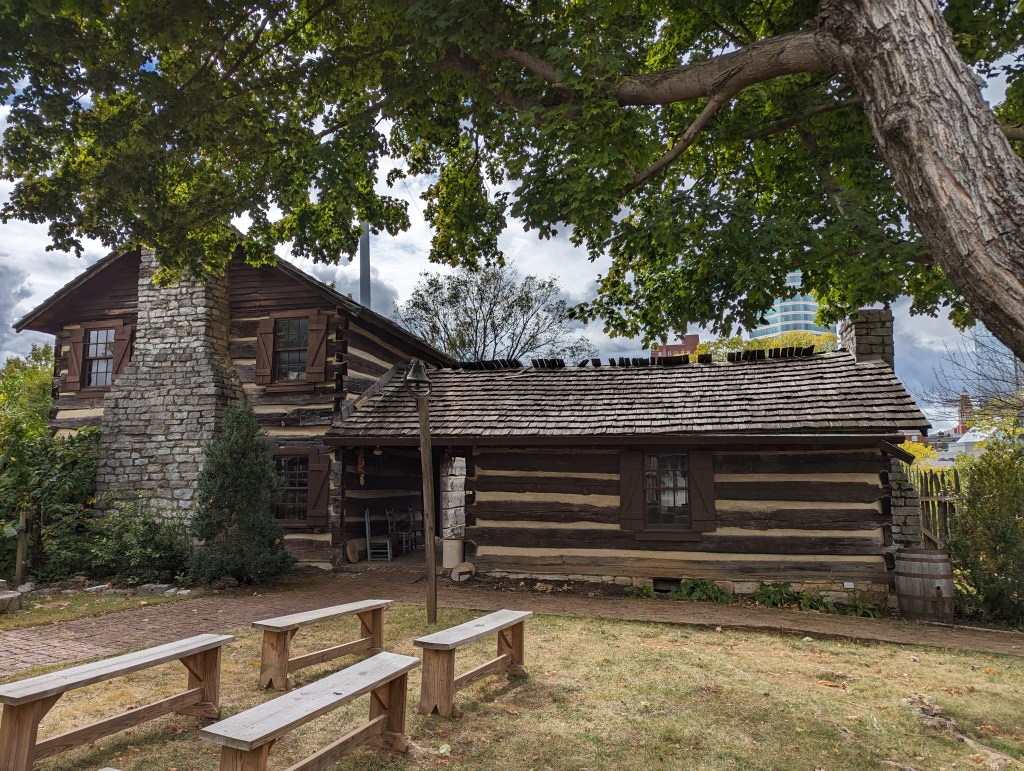
Of the two sites I visited, I found the Mabry-Hazen House to be better presented, overall. Although it is a small historic house museum, my guide was extremely knowledgeable about history of the house and the families who lived there. Most importantly, in my opinion, the tour focused not only on the white families who lived “upstairs,” but also the enslaved people and, after the Civil War, Black domestic servants whose labor made the Mabry and Hazen families’ lifestyle possible. At James White’s Fort, the tour was self-guided, which I have no problem with, but the written guide given to visitors is in need of updating. While the guide acknowledged that James White was a slaveowner and that enslaved people lived at the fort, there were few details provided about the kinds of work that White’s enslaved people would have done and what life was like for enslaved people on the frontier. The guide could also have provided more information about White’s relationship with the local Native Americans on whose land he settled.
All in all, I think I did a good job of digging deeper into Knoxville’s history on this visit. Unfortunately, I was not able to visit the Blount Mansion, the other major historic site in downtown Knoxville, as it was closed during my visit. I suppose I will just have to come back to Knoxville! I visited Oak Ridge on my way home, so stay tuned for an exploration of the Secret City’s history.



 Making the Past Present
Leave a comment