
If you’ve read this blog before, you’ve probably guessed that London has a special place in my heart, given how frequently I write about it. London is indeed one of my favorite cities, and I’ve been fortunate enough to be able to go there several times in the last few years, most recently right before Christmas. If you haven’t been to London in December, definitely put it on your list! While the days are short, Christmas lights across the city brighten things up, and the city is very lively in the weeks before Christmas.

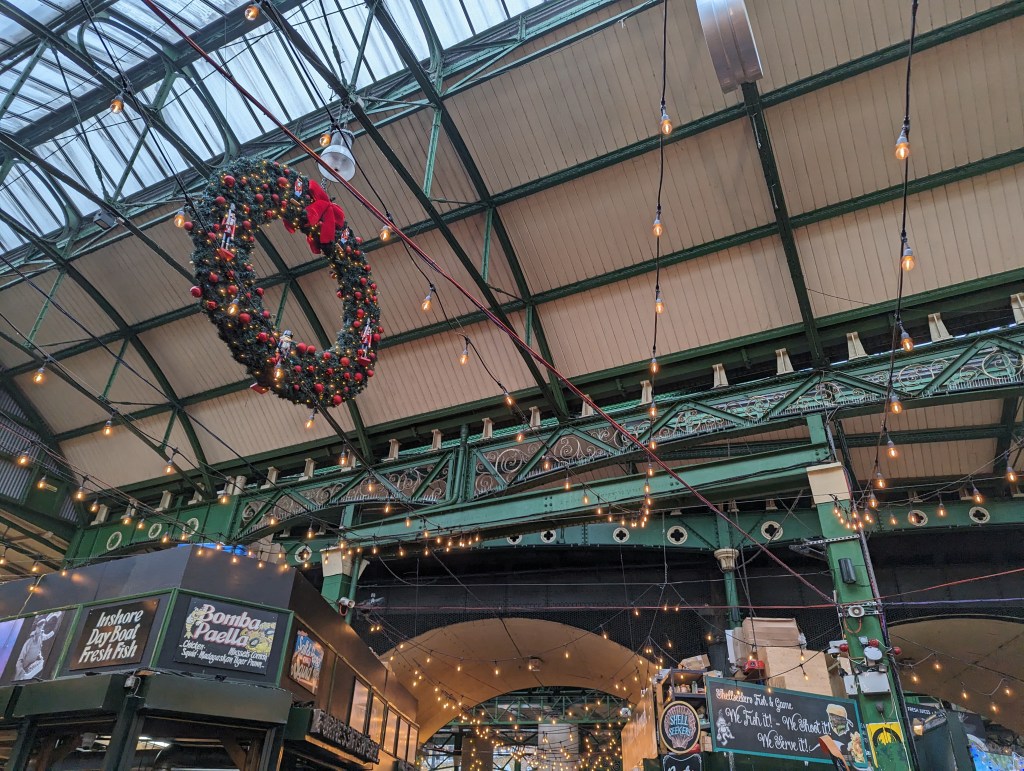
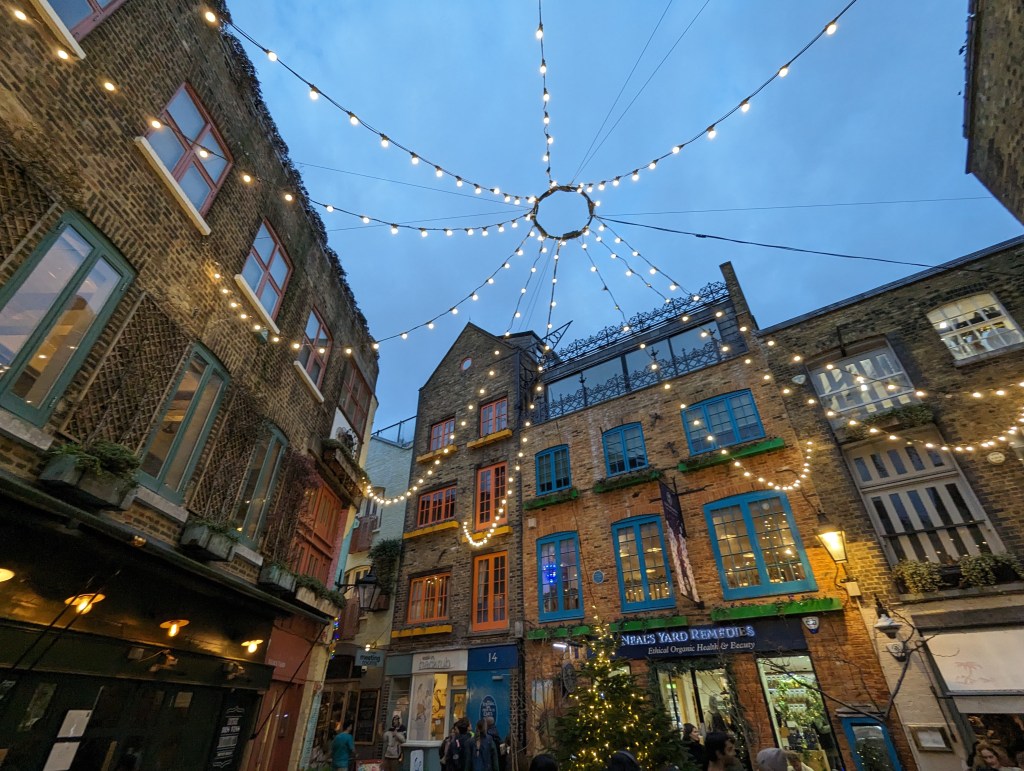
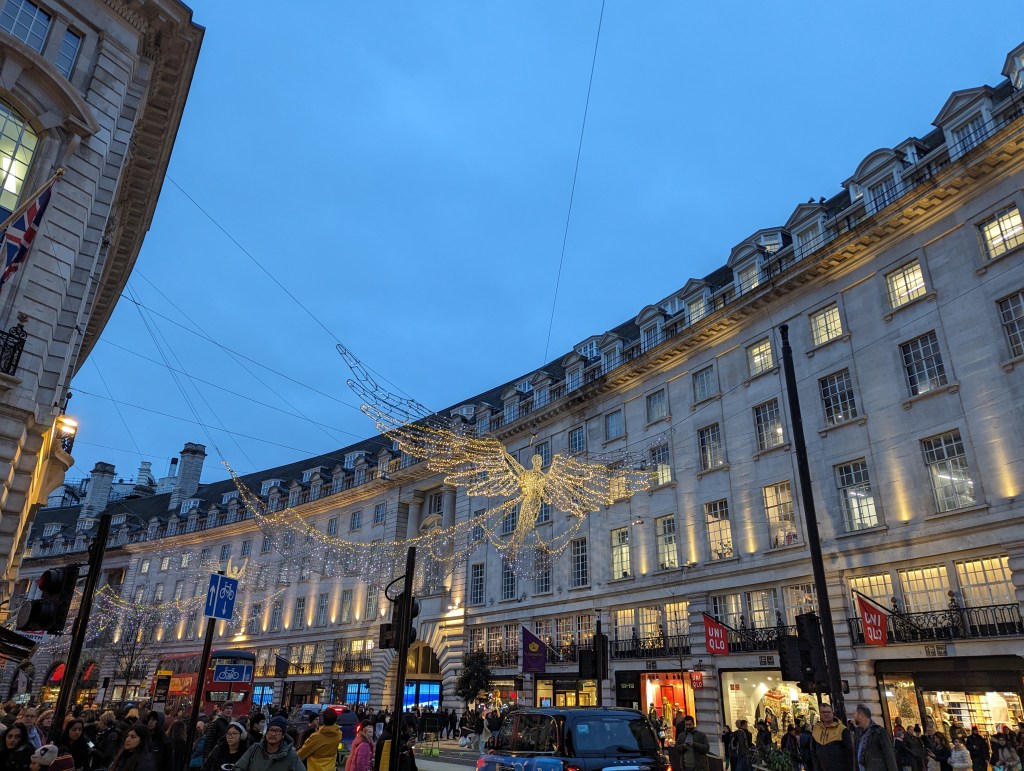
Enough of the Christmas pictures, time for some history! Each time I visit London, I try to explore at least one place that I haven’t been before. For the remainder of today’s post, I’m going to highlight two of the new places I discovered on my December trip.
Just across Regent’s Canal from Kings Cross and St. Pancras railway stations, you will find the area known as Coal Drops Yard. The name gives a clue as to the area’s former function: in the 19th century, it served as a coal drop (a place for unloading coal). Coal mined elsewhere in Britain would be sent to London by rail, where it would arrive at Coal Drops Yard; the coal would then be unloaded and sent around the city either by horse-drawn cart or narrowboat on Regent’s Canal. In the mid-19th century, Coal Drops Yard was a vital part of London’s infrastructure, as coal was the main source of energy for heating, lighting, and industry. As electricity replaced coal as the primary source of energy, the buildings at Coal Drops Yard became warehouses for various kinds of goods. In the 1980s, some of the warehouses at Coal Drops Yard, by then out of use, became the site of nightclubs connected to the rave scene. After the final nightclub closed in 2008, the site was redeveloped into a shopping mall.
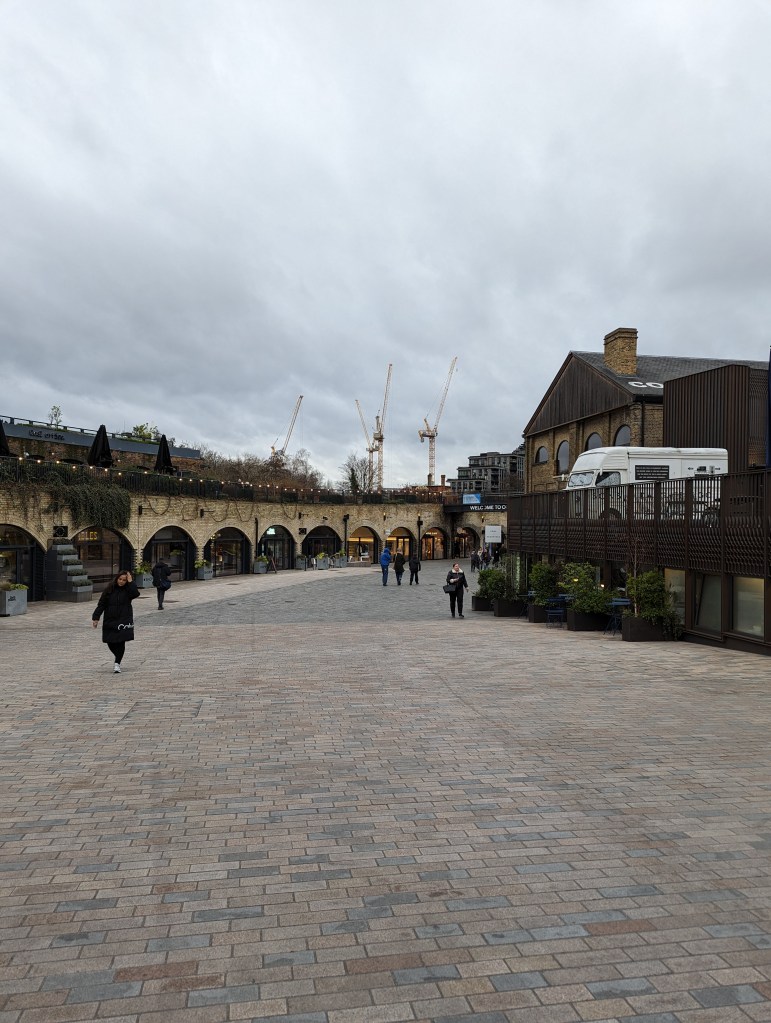
Although I’ve been to Kings Cross station many times, I never knew about Coal Drops Yard until I started planning my December trip to London. If you’re in the Kings Cross area, I recommend checking out Coal Drops Yard. In addition to its interesting history, it’s a calmer and quieter area away from the hustle and bustle of the two major railway stations. Given the area’s proximity to Regent’s Canal, you could easily combine a visit to Coal Drops Yard with a walk along the canal.
Moving east from Kings Cross, we come to the other new area I discovered on my latest trip to London. In the East End, near Old Spitalfields Market and Shoreditch High Street, there is a street called Brick Lane. In many ways, the history of Brick Lane is a microcosm of the larger history of the East End, particularly in terms of immigration to East London. As the name Brick Lane suggests, the first industry in the area was brick and tile manufacture, beginning in the 15th century. In the 17th century, brewing became another major industry in the area. Indeed, Truman’s Brewery, one of the largest brewers in the world in the late 19th century, had a major presence on Brick Lane until it closed in the late 1980s.
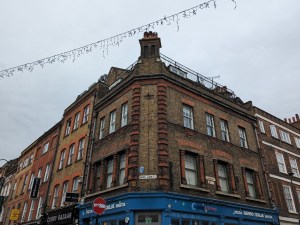
Brick Lane, like the East End as a whole, has a long history of immigration. The first major group of immigrants to settle in the Brick Lane area were Huguenot (French Protestant) refugees fleeing persecution in France in the 17th century. The Huguenots transformed the area in two major ways. First, they established weaving and tailoring businesses there, making the area a center of the developing clothing industry in London. Second, they built a chapel on Brick Lane, which opened in 1744. As we will see, the history of this Huguenot chapel parallels the multiple transformations of the area over the centuries.
In the late 19th and early 20th centuries, a new group of immigrants settled in the Brick Lane area: Yiddish-speaking Jews fleeing persecution in the Russian Empire. As the demographics of the area changed, so too did its main religious building. In 1891, the Huguenot chapel (which had in the interim become a Methodist church) became a synagogue. By the 1930s, increased prosperity and a desire to leave the crowded East End led many Jews living in the East End to begin moving to other parts of London, particularly North London. In 1970, with the Jewish population in the Brick Lane area having significantly declined, the synagogue on Brick Lane moved to a new location in Golders Green, a major center of the Jewish community in North London.
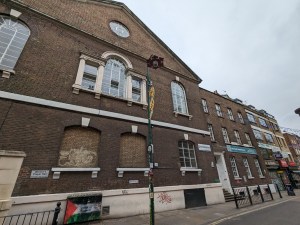
At the same time, a new wave of immigration transformed the Brick Lane area yet again. After the Second World War, many people emigrated to London from Bangladesh in search of work. Many of these Bangladeshi immigrants settled on Brick Lane. As a result of this third wave of immigration to Brick Lane, the area is now famous for its many curry restaurants. The growing Bangladeshi community in the area also sought to establish their own place of worship. Following the synagogue’s move to Golders Green in 1970s, the Bangladeshi community acquired the building formerly used by the synagogue and transformed it into a mosque, which opened in 1976. The building, which is Grade II* listed (the second-highest heritage designation in England), thus has the distinction of having served three different faiths during its history.
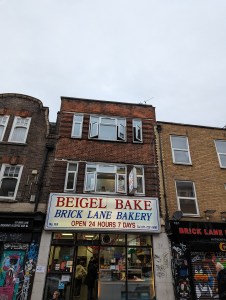
Today, Brick Lane also has a lively art scene and has been the site of urban regeneration projects, such as the transformation of the former Truman’s Brewery into an arts center and office space. Unfortunately, when I was in the Brick Lane area, it was too early in the day to eat at one of the area’s curry restaurants. However, I did have a snack at the Beigel Bake Brick Lane Bakery, a 24/7 bagel shop and a reminder of the area’s Jewish history. As I ate my (delicious) bagel, I pondered the rich history of Brick Lane, which serves as a reminder of just how many layers of history there are in London.



 Making the Past Present
Leave a comment