
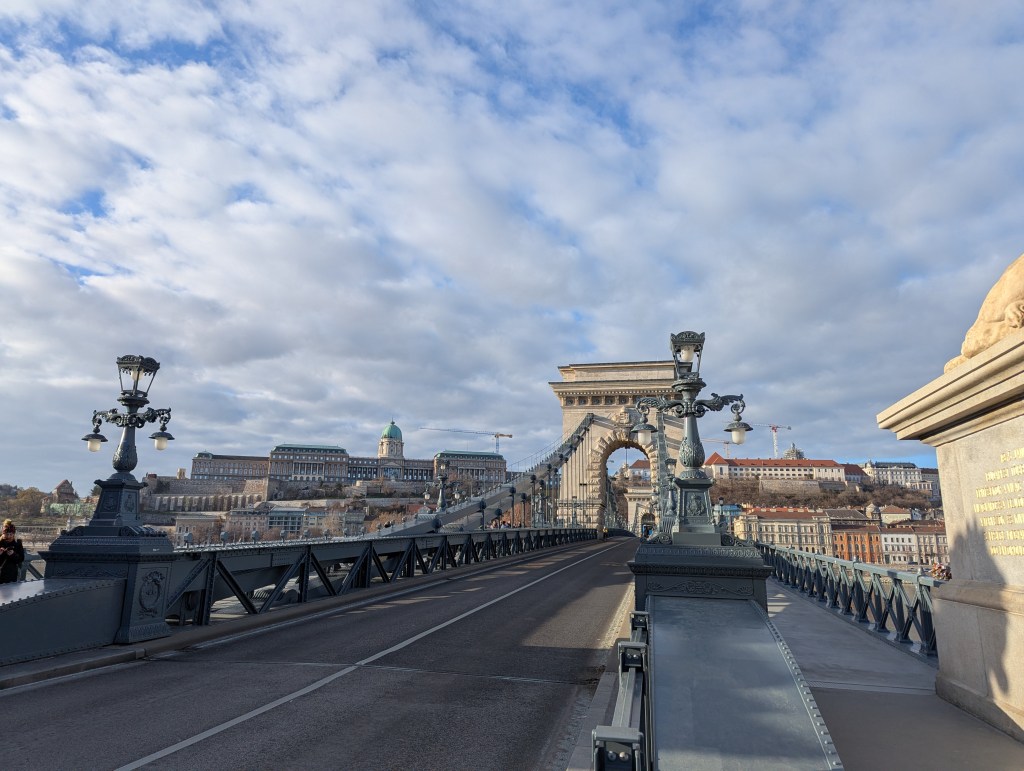
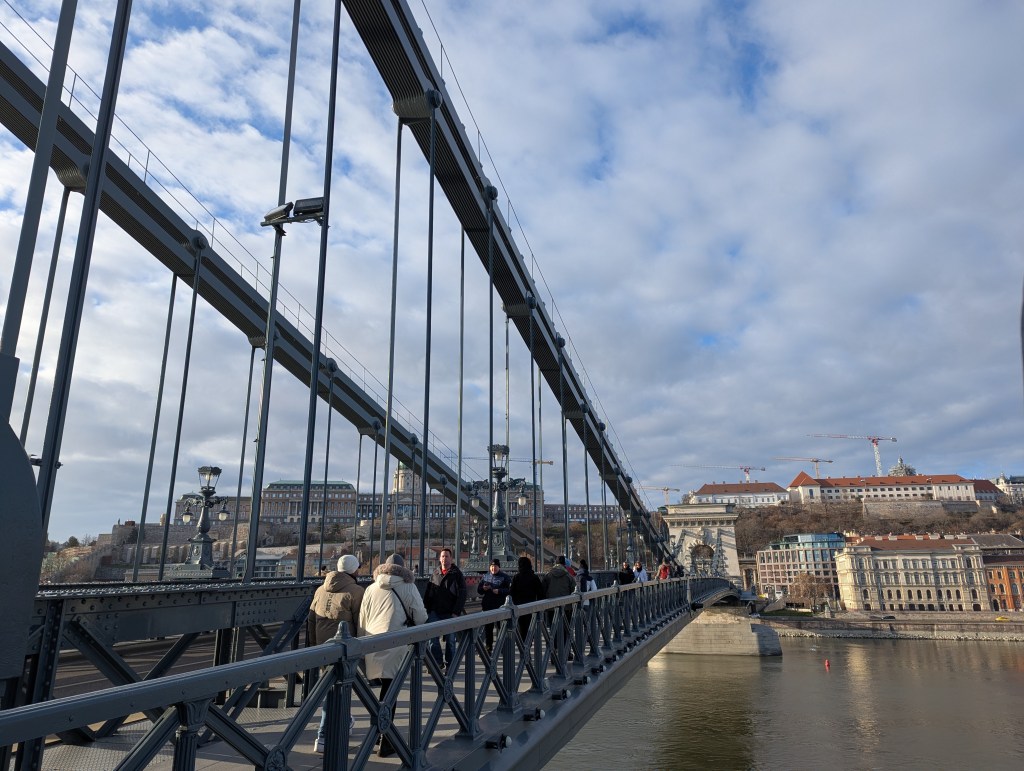
I had so many highlights of Budapest that I couldn’t fit them all into one post, so I’m back with part two. If you missed part one, you can find it here. On my second (and last) full day in Budapest, I finally made it over to the Buda side of the city. My hotel was quite close to the famous Széchenyi Chain Bridge, which spans the Danube, linking Buda and Pest. The bridge opened in 1849 and was the first permanent bridge across the Danube in Hungary. The bridge is named for Count István Széchenyi, who was a major supporter of its construction, but, interestingly, it was designed by an English engineer, and its construction was supervised by a Scottish engineer. In January 1945, during the final stages of the Siege of Budapest, German forces blew up the Chain Bridge as they retreated from Budapest. After World War II, the bridge was reconstructed, and it reopened in 1949.
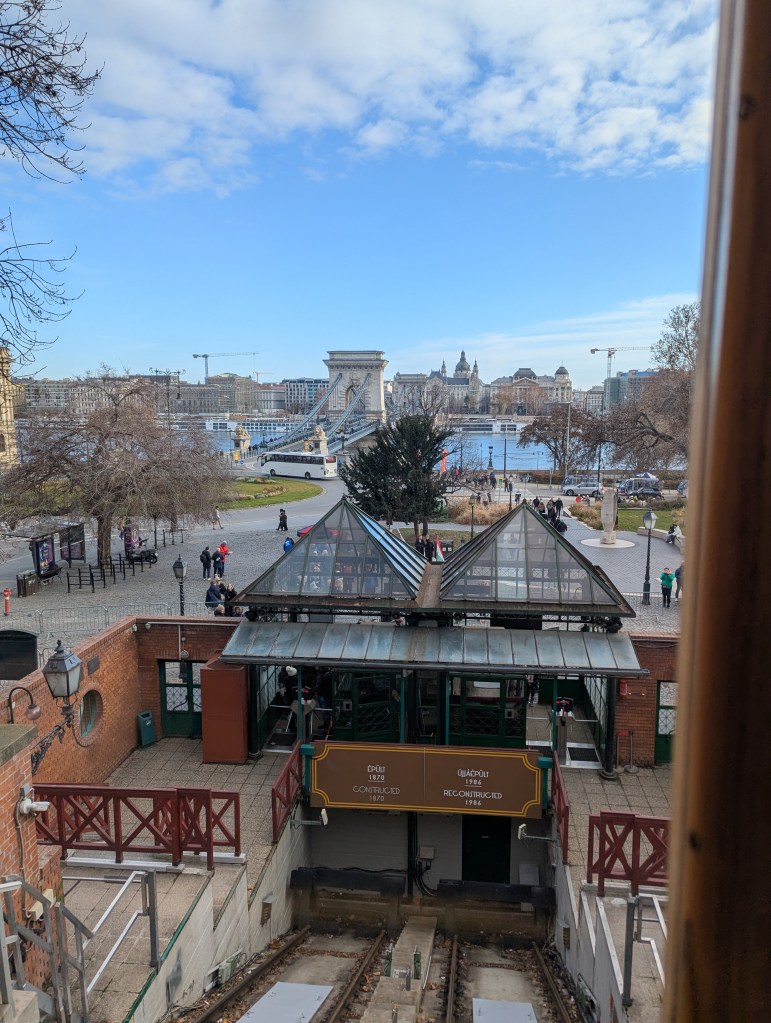
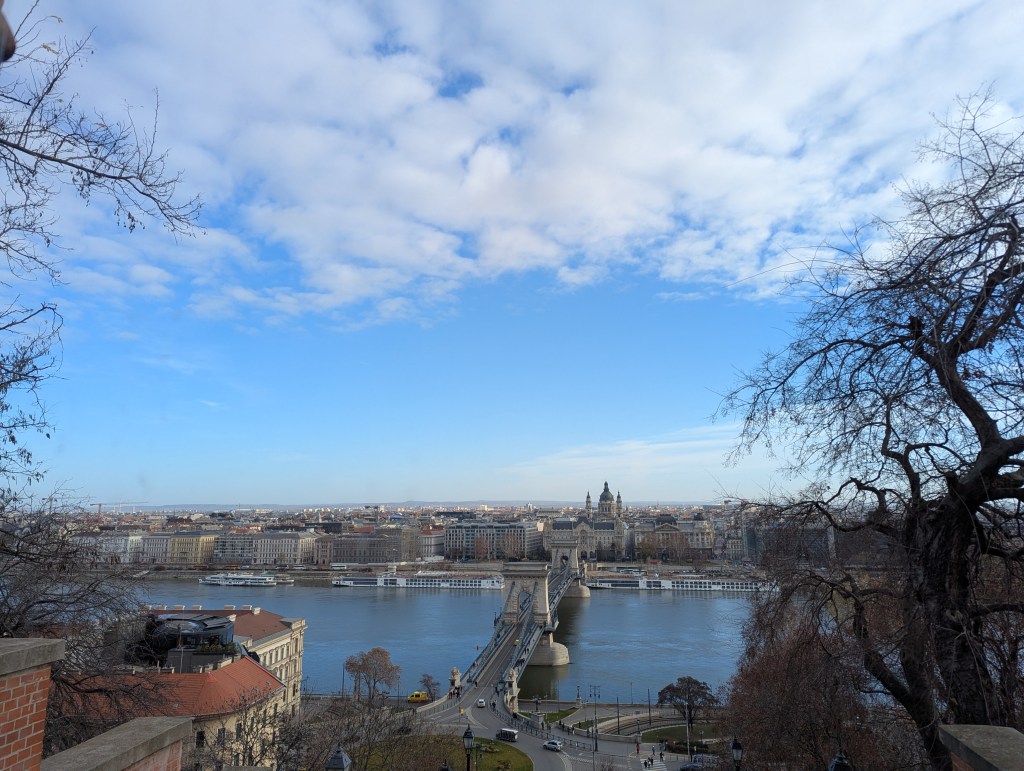
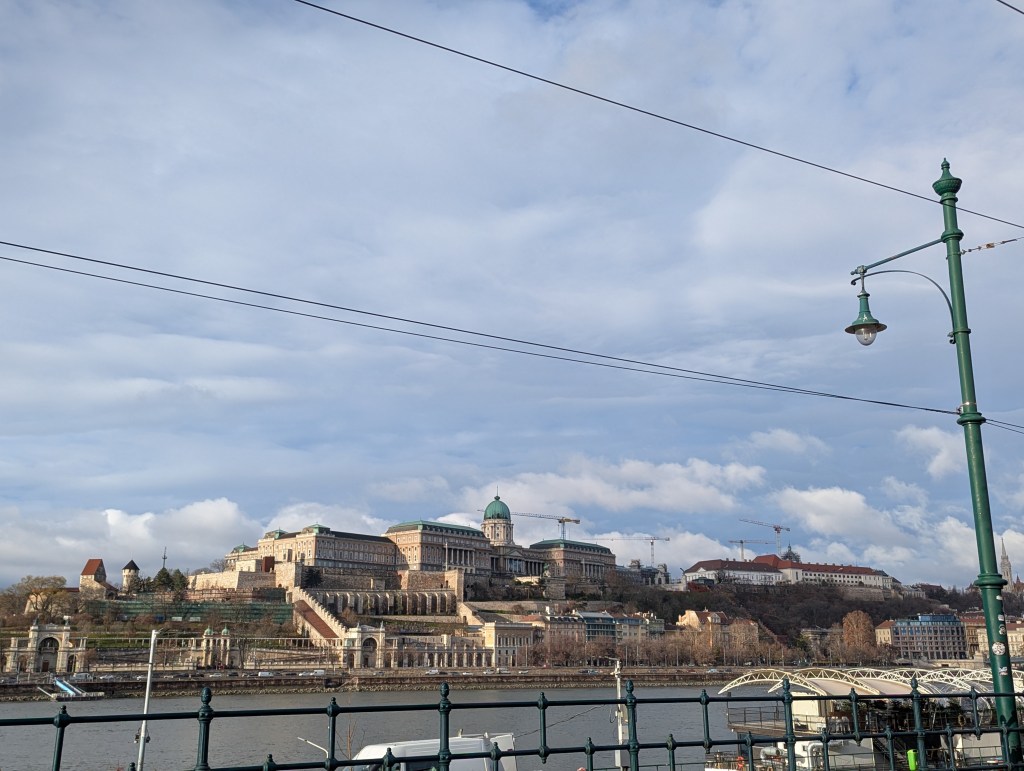
Once I crossed the river and reached Buda, I took the Buda Castle Funicular up to Buda Castle Hill. The funicular opened in 1870 and has been operating ever since. Like the Chain Bridge, the funicular was destroyed during the Second World War, but it was reconstructed in its original style. The funicular only takes a few minutes to reach the top of the hill, but the views are worth paying for the short ride, as you can see out across the Danube toward Pest.
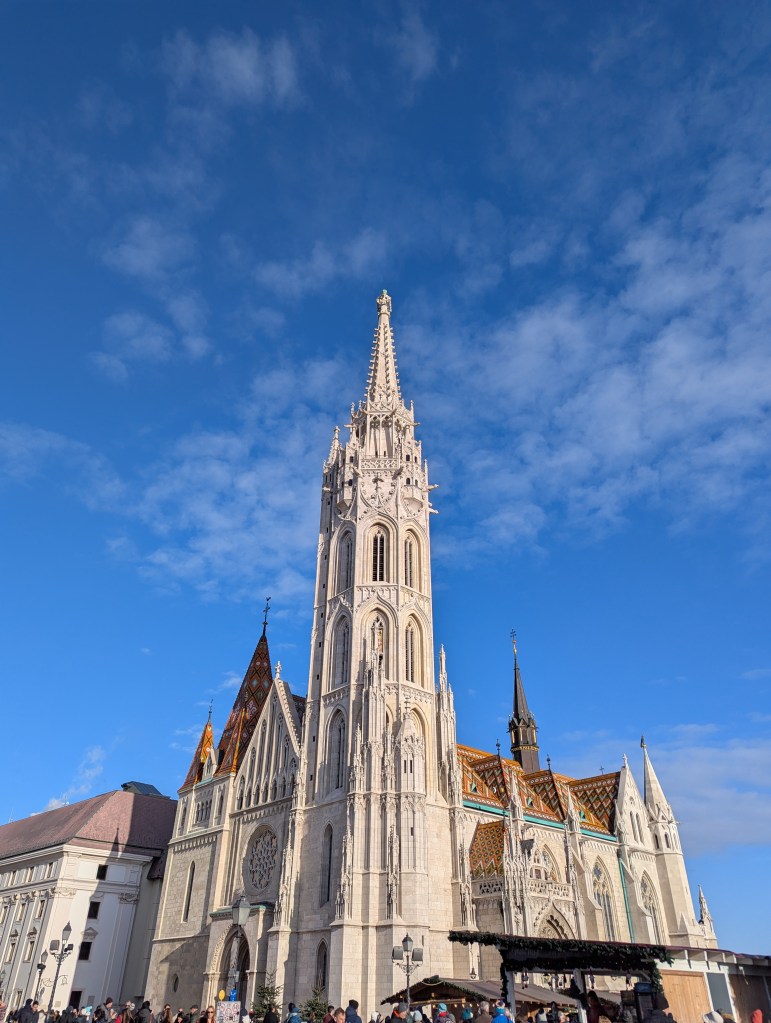
I chose not to go to Buda Castle, as little to nothing of the original interior apparently remains, so I walked from the castle to the Matthias Church, a 14th-century Gothic church in Buda’s Castle District. The church was extensively restored in the 19th century and hosted the coronation of Emperor Franz Joseph and his wife Elisabeth, when they were crowned King and Queen of Hungary in 1867 following the creation of the Dual Monarchy (Austria-Hungary). The final Austrian Emperor/King of Hungary, Karl, was also crowned in the church in 1916, just two years before the collapse of the Austro-Hungarian Empire.
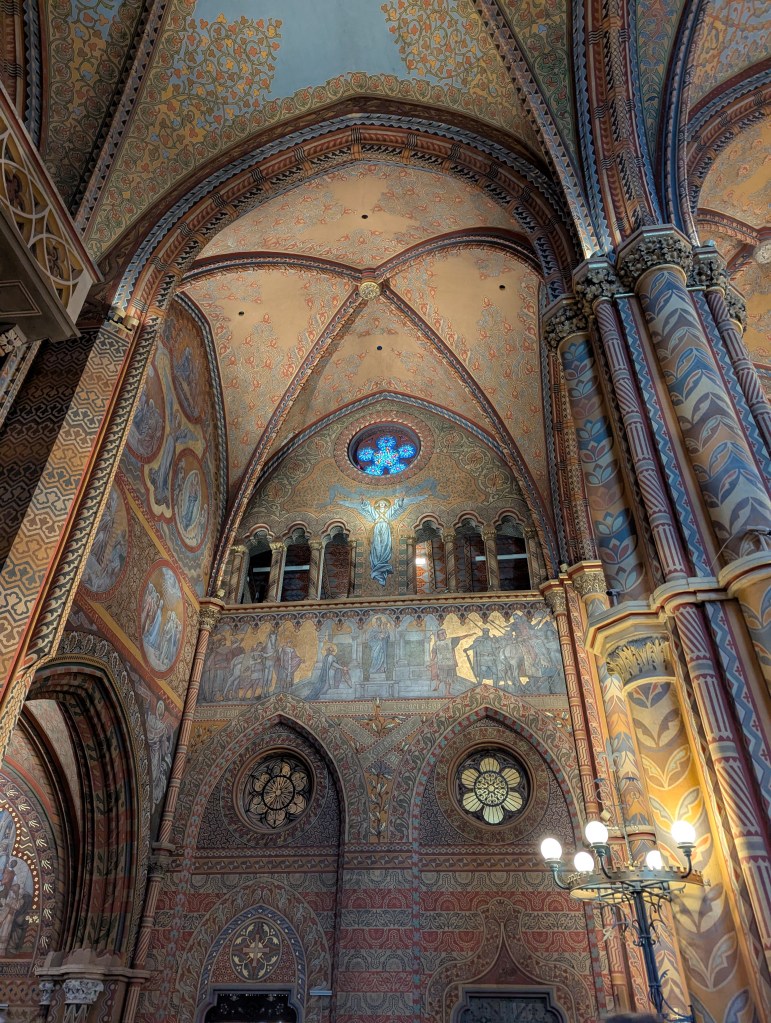
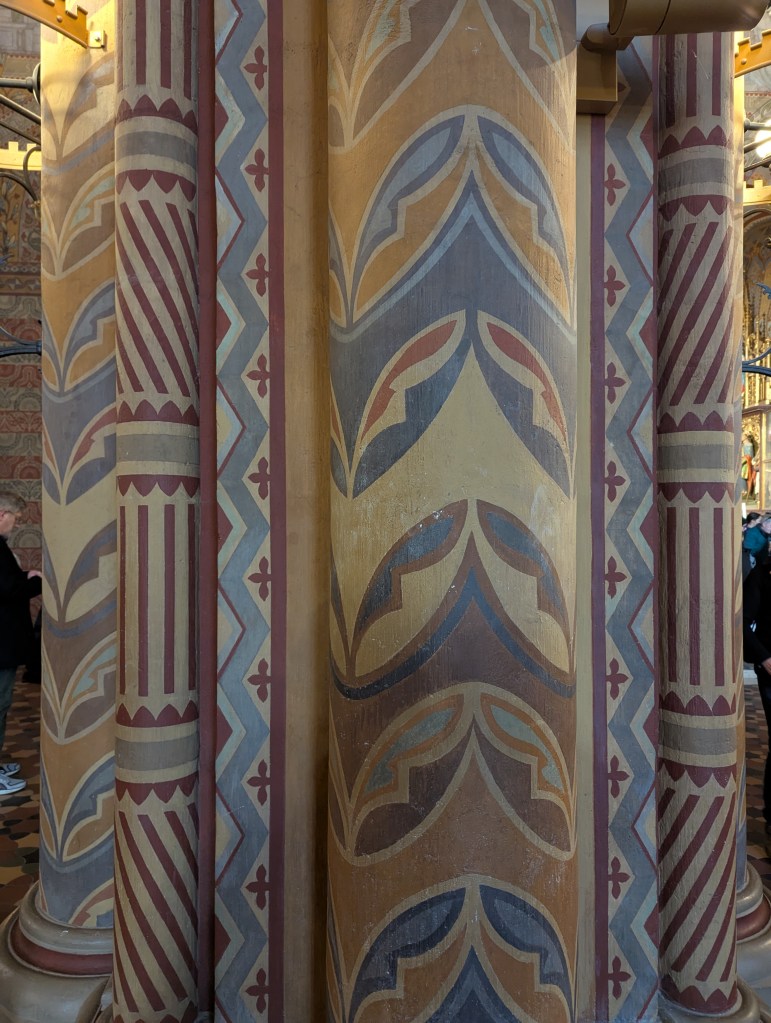
The interior of the Matthias Church is extremely ornate, with paintings on almost every wall, as well as the columns supporting the roof. It is certainly a very different style from English Gothic churches, which since the Protestant Reformation are much plainer, at least in terms of painted decoration, on the interior.

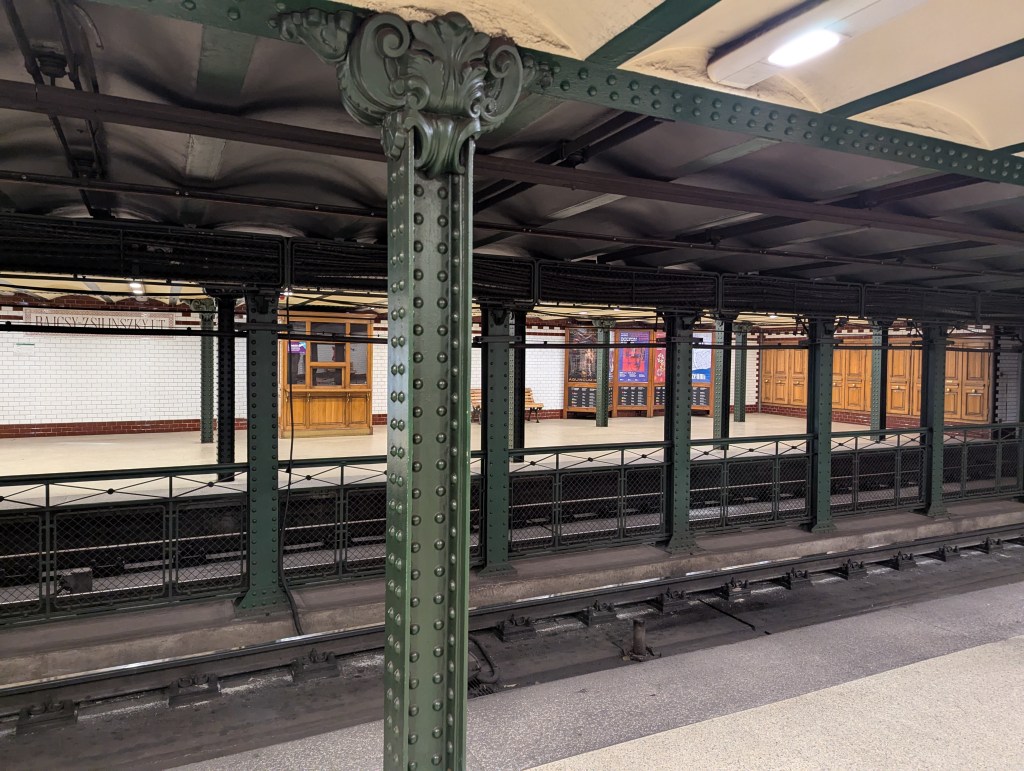
To round off this post with a few more highlights of Budapest, I rode on the city’s original metro line (the M1), which opened in 1896. The Budapest Metro is the world’s second oldest electrified underground railway, after the London Underground, so I can now say that I’ve ridden on the two oldest electrified underground railways. The M1 line is very shallow (not very far underground). To access the line, I just walked down a single flight of stairs from street level and was on the platform. At many of the stations, the original architecture has been preserved, with iron support columns and tiled walls. Because the M1 line is so shallow, the trains are quite small, much smaller than trains on the other metro lines in Budapest or the trains on the London Underground.
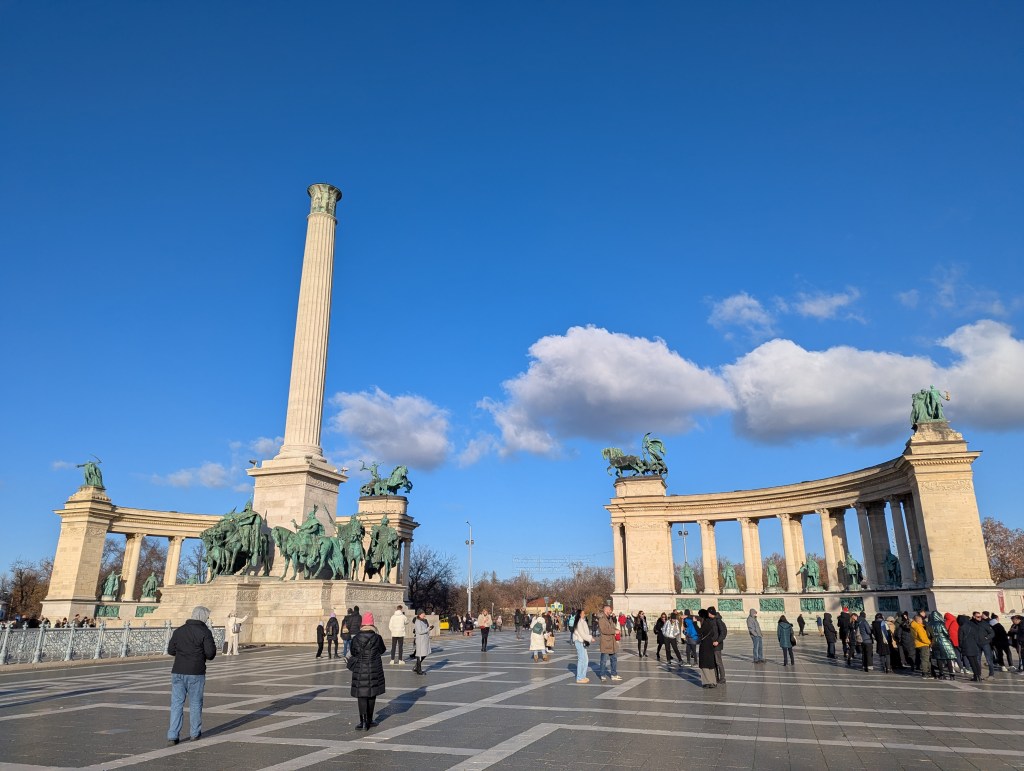
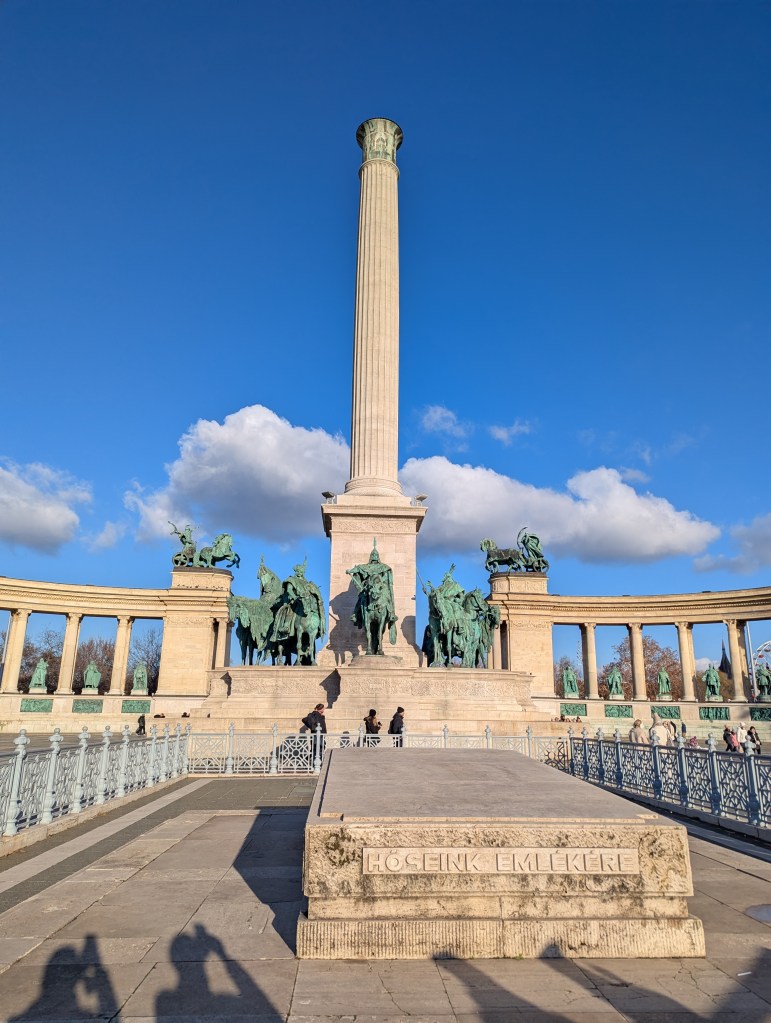
My final major stop in Budapest was Heroes’ Square, which was constructed between 1896 and 1906 near the City Park. Constructed began in 1896, the 1000th anniversary of the Hungarian conquest of the Carpathian Basin and the establishment of a Hungarian state. The square is dominated by a large column, at the base of which are equestrian statues of the seven chieftains of the Magyars, or the leaders of the seven tribes of the Hungarians at the time they arrived in the Carpathian Basin. Behind the column are two curved colonnades, which feature statues of other important figures in Hungarian history, beginning with St. Stephen, the first king of Hungary. Because Heroes’ Square was constructed during the period of Habsburg rule in Hungary, the last five statues in the colonnade were originally of prominent Habsburg rulers, including Empress Maria Theresia and Emperor Franz Joseph. During World War II, the square was damaged, and when the monument was rebuilt after the war, these five statues were removed and replaced with five Hungarian figures, including Lajos Kossuth, the leader of the Hungarian revolution in 1848, an attempt to create an independent Hungary.
Near Heroes’ Square is a much more modern monument, the Memorial to the 1956 Revolution. The Hungarian Revolution of 1956 was an uprising against Soviet domination of Hungary and the Soviet-backed Hungarian communist government. Imre Nagy, a reform-minded communist, briefly took power and attempted to implement democratic reforms and to pull Hungary out of the Warsaw Pact, the Soviet-led military alliance. In early November 1956, the Soviet Union responded to the Hungarian Revolution by invading Hungary, deposing Nagy, and installing a Soviet-backed leader. At least 2,500 Hungarians were killed during the suppression of the uprising, and 200,000 fled the country. Nagy was tried and executed in 1958. In 1989, following the fall of communism in Hungary, Nagy was rehabilitated and reburied.
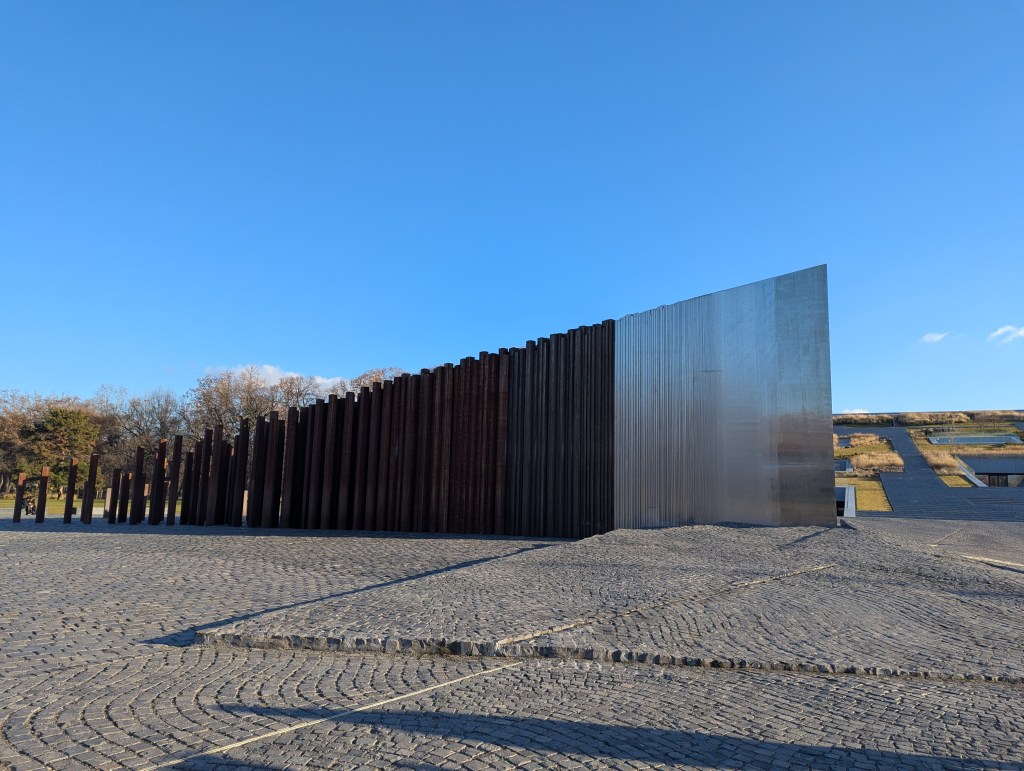
In 2006, the Memorial to the 1956 Revolution was completed. It is very modern and abstract in style, with separate columns at the rear of the monument (on the left in the image below) gradually merging to become one steel wedge. The design symbolizes individual Hungarians joining together during the 1956 revolution to become one united community.
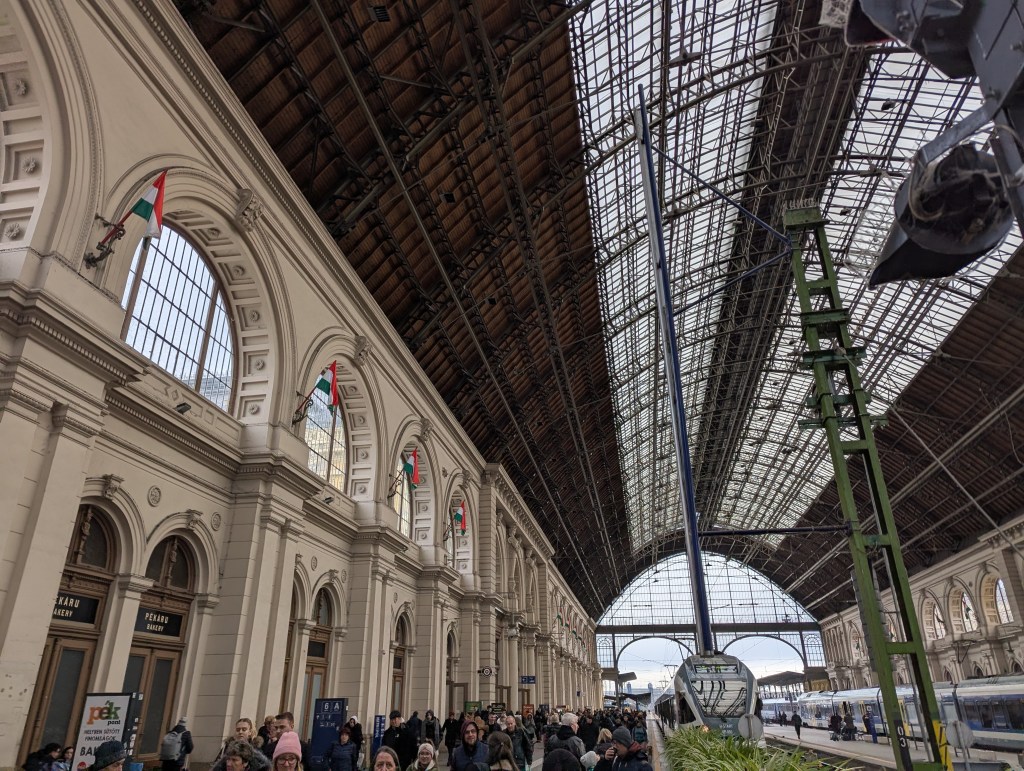
The next day, my final stop in Budapest was the Budapest-Keleti train station, where I caught a train to Vienna. The station was constructed between 1881 and 1884, and the architecture is very grand, with an elaborate facade and arched steel canopy over the platforms.

I greatly enjoyed my time in Budapest. I found the city and its history fascinating, and the architecture of the old city was beautiful. I definitely recommend visiting Budapest for anyone interested in learning more about the complex history of Central Europe.


 Making the Past Present
Leave a comment