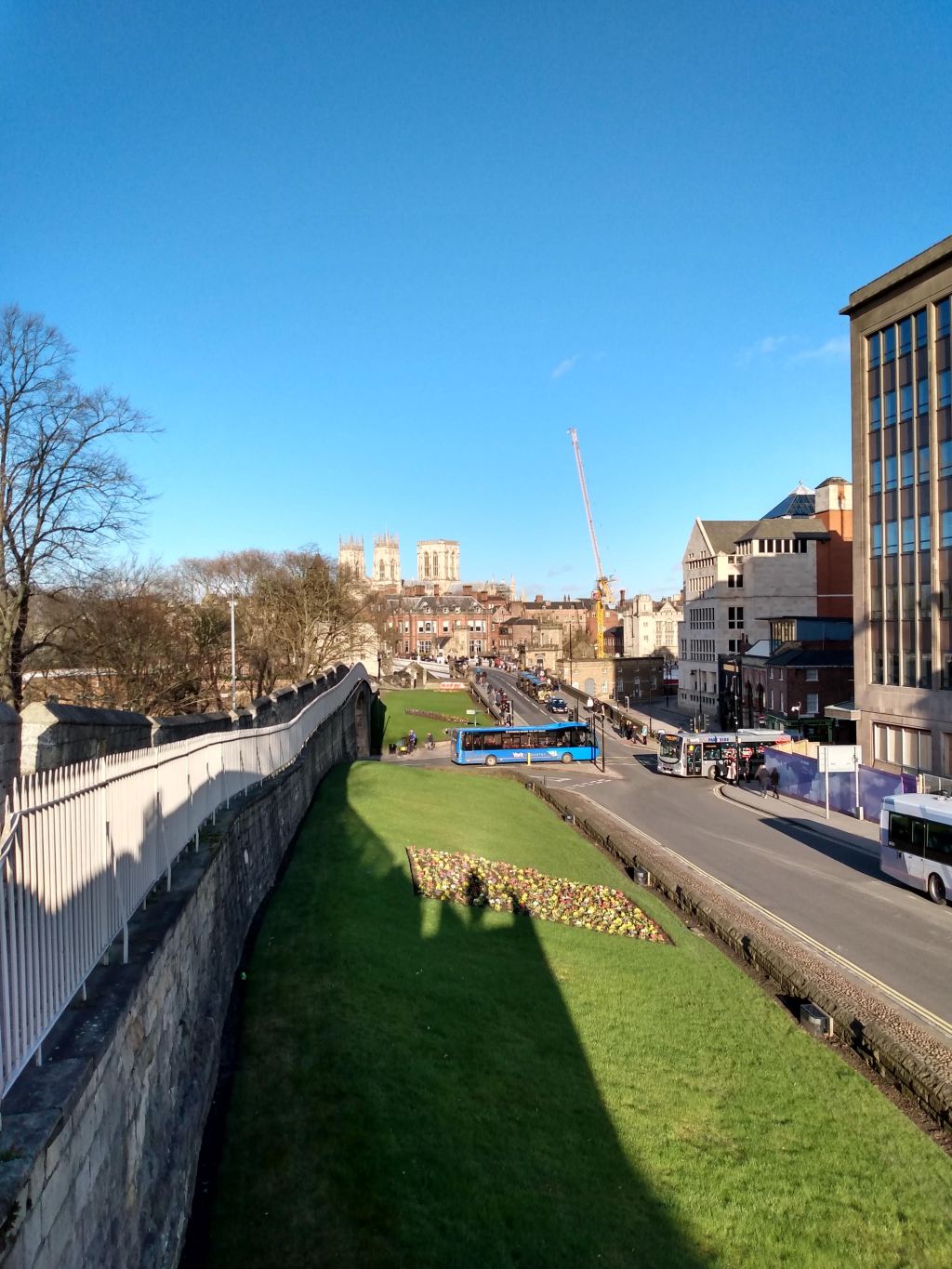

The last few weeks have been very busy, for one main reason: I moved to the UK to start my MA in cultural heritage management at the University of York. Between settling into my new room at Wentworth College, getting to know my fellow archaeology postgraduate students, and exploring my new city (plus attending seminars and doing all of the reading), I haven’t gotten around to posting anything about York yet. Given that I am still learning about the history of York and its heritage sites, what follows is a brief introduction to the beautiful, historic, lively city of York (which, it happens, was recently named the best city in Britain).
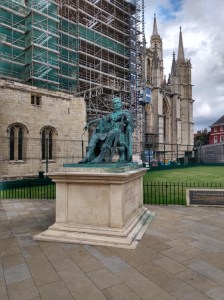
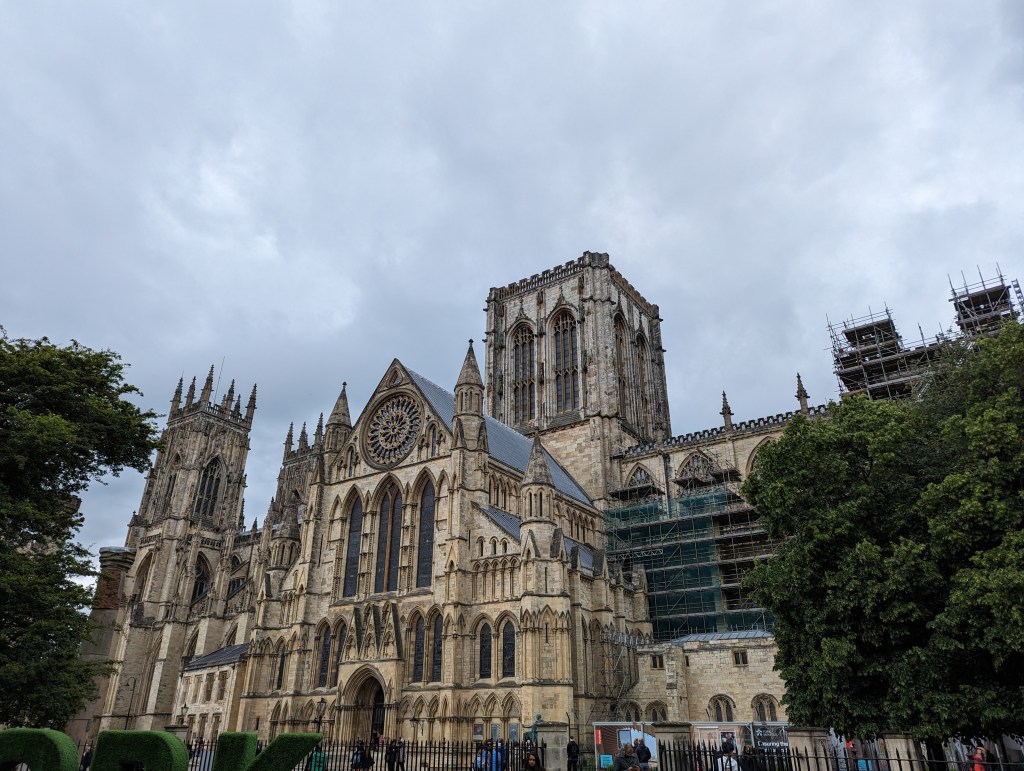
York has a very long, complex history, going all the way back to the first century AD. After invading Britain, the Romans set about solidifying their hold on their new province of Britannia, especially in the frontier areas (what is today the north of England). In 71 AD, the Romans established a frontier fortress at a place they called Eboracum, a highly defensible site because of the two rivers that came together there (today: the Ouse and the Foss). Interestingly, it was at Eboracum that Constantine, known for legalizing Christianity in the Roman Empire and founding Constantinople, was proclaimed emperor. Today, there is a statue of Constantine near York Minster, which sits atop the site of Roman Eboracum.
By the early 5th century AD, with Rome under attack from Germanic peoples (the “barbarians”) and struggling to maintain control of its sprawling empire, the Romans withdrew from Britannia, leaving behind their fortress at Eboracum. Following the Roman withdrawal, there is no record of Eboracum in historical sources for around 200 years. Was it completely abandoned by its residents? Did some Romano-British people continue to live there? No one knows.
It is not until the 7th century that Eboracum/York reappears in the historical record, when the Anglo-Saxon king of Northumbria, Edwin, rebuilt the town and made it his chief city. (Side note: the Anglo-Saxons invaded and settled Britain in the centuries following the Roman withdrawal, seeking new lands to settle because of the turmoil on the continent as the Roman Empire collapsed.) Edwin, newly converted to Christianity, built the first wooden minster (cathedral) in York, no physical trace of which has survived. In the late 9th century, York was captured once again: this time by the Vikings, who renamed it Jorvik and established it as the principal city of the territory they conquered and ruled in England.

Retaken by the Anglo-Saxons in the 950s, York was conquered one final time about a century later: by the Normans, during the Norman Conquest of England beginning in 1066. Following several abortive revolts against Norman rule in the late 1060s and 1070s, William the Conqueror finally “pacified” York as part of his brutal campaign against northern England (the area most resistant to Norman rule). As a physical manifestation of Norman authority, William built a stone castle at York. At the same time, his archbishop of York began the construction of a new Norman (Romanesque) minster, a demonstration of Norman authority in both the temporal and spiritual realms. When the new Gothic style of architecture became popular in England in the 13th century, York Minster was gradually rebuilt into the impressively large cathedral it is today, with its soaring vaulted ceilings (to draw one’s eyes up toward heaven), tall pointed arches, and beautiful medieval stained glass.
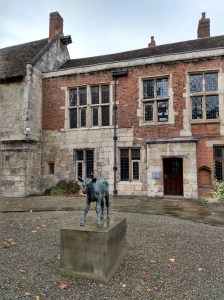
Always an important city in northern England during the medieval period, York suffered a reversal of fortunes during the Tudor era. Following Henry VIII’s break with Rome and the Dissolution of the Monasteries, most of York’s religious houses were closed. This sparked a revolt against Henry’s rule throughout northern England. However, the revolt was crushed, and its leaders were executed. Realizing he had to pacify his northern subjects in order to preserve his authority (and protect his rule), Henry re-founded the Council of the North, an administrative body for northern England, in 1537 and based it in the King’s Manor in York (formerly part of an abbey).
Time to skip ahead several centuries – past the English Civil War, when York once again backed the wrong side and was captured by the Parliamentary army – to the nineteenth century. At a time when many northern cities, such as Manchester and Leeds, became centers of the Industrial Revolution, large-scale industrialization passed York by. However, because of the efforts of a local railroad entrepreneur in the 1830s, York became an important station on the north – south railway lines (which it still is today). Around the time that the railroad came to York, the city’s other major industry was just taking off: confectionary. Joseph Rowntree was one of the first confectionary manufacturers in York. According to my walking tour guide, he trained a young George Cadbury (although Cadbury chocolate was never manufactured in York).

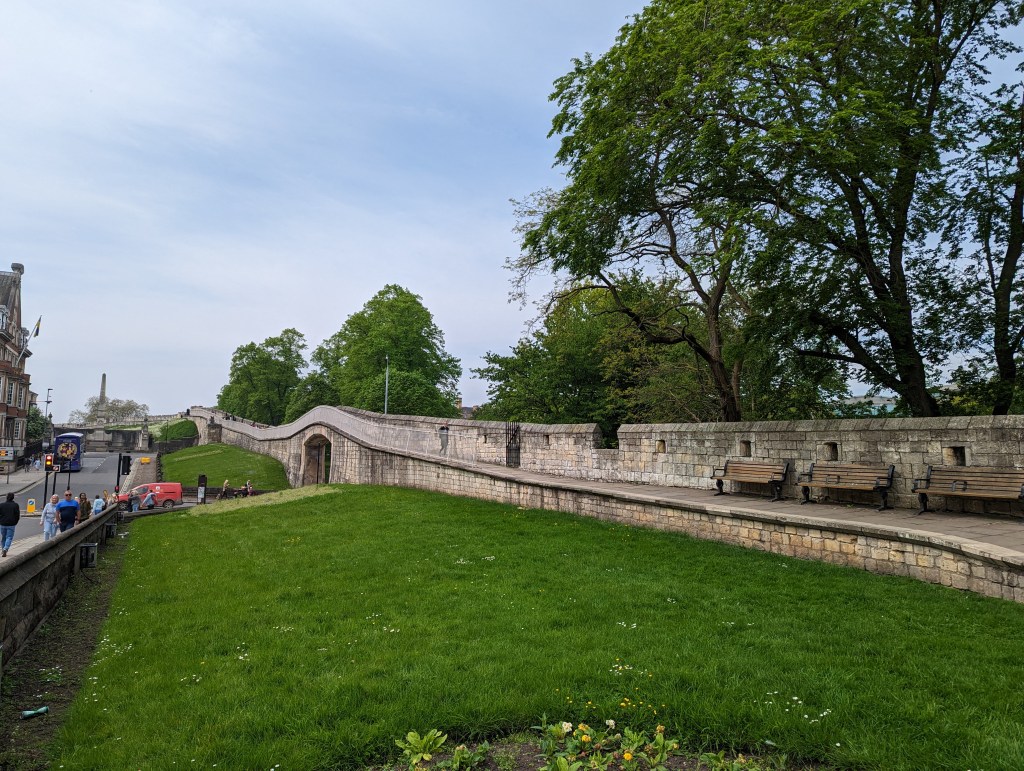
Damaged by bombing during the Second World War, York spent a number of years after the war rebuilding. As Britain (and Europe) recovered from the war and people had more money for leisure pursuits, such as tourism, York became a tourist destination, with visitors drawn its well-preserved historic city center, York Minster, and its remarkably intact city walls.
Today, York has been named the best city in Britain several times, for its heritage, cultural offerings, and thriving restaurant and café scene. Although it is a (relatively) small city, York has a lot to offer – and I’m looking forward to discovering all that it has to offer!



 Making the Past Present
Leave a reply to Five Best . . . Undergraduate Classes – Making the Past Present Cancel reply