When you read the words “A Tour of Augusta Treverorum,” the first question that probably springs to your mind is “what is Augusta Treverorum?”. And rightfully so. No town by that name has existed for more than a thousand years. But Augusta Treverorum lives on, its buildings interspersed with those of the city which succeeded it – Trier, Germany.
Located in the western German state of Rhineland-Palatinate, near Germany’s borders with Luxembourg and France, Trier is believed to be Germany’s oldest city. People have lived in this area since the Neolithic period. In slightly less ancient times, members of the Treveri, a Celtic tribe, established a settlement here. The Romans reached this area in the 1st century BC, conquered the Treveri, and established the city of Augusta Treverorum in 16 BC.

Augusta Treverorum was an important Roman provincial city, eventually becoming the capital of the Prefecture of Gaul, which encompassed Gaul, Britannia, Spain, and part of the North African coast. By the 4th century AD, Augusta Treverorum was one of the largest cities in the Roman Empire. As befitting an important Roman city, Augusta Treverorum had many large buildings, including the Porta Nigra (a city gate), Roman baths, an amphitheater, a bridge, and a Roman palace basilica.
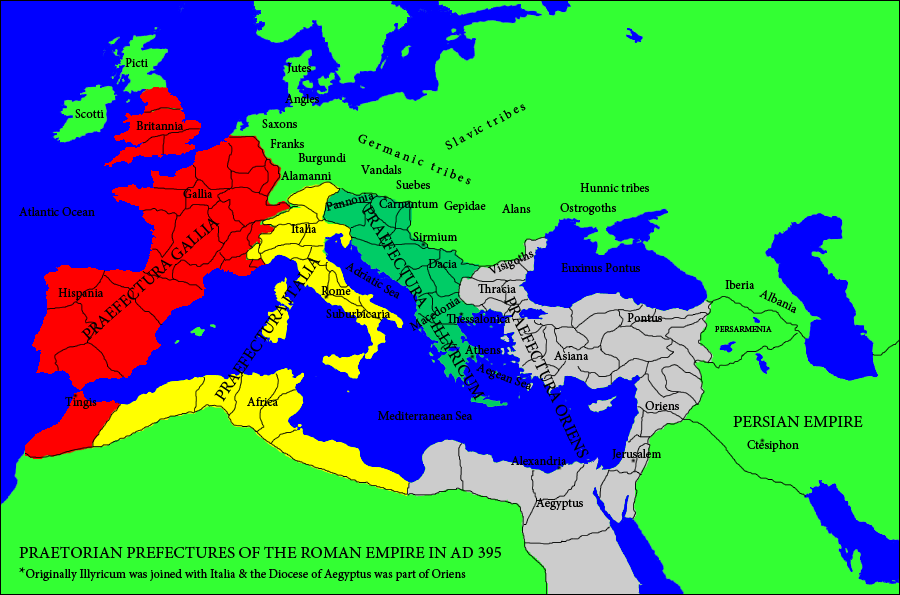
With all of this Roman heritage, Trier is worth a stop (when we’re able to travel again) if you’re visiting Germany, France, or Luxembourg.
Roman Sites in Trier
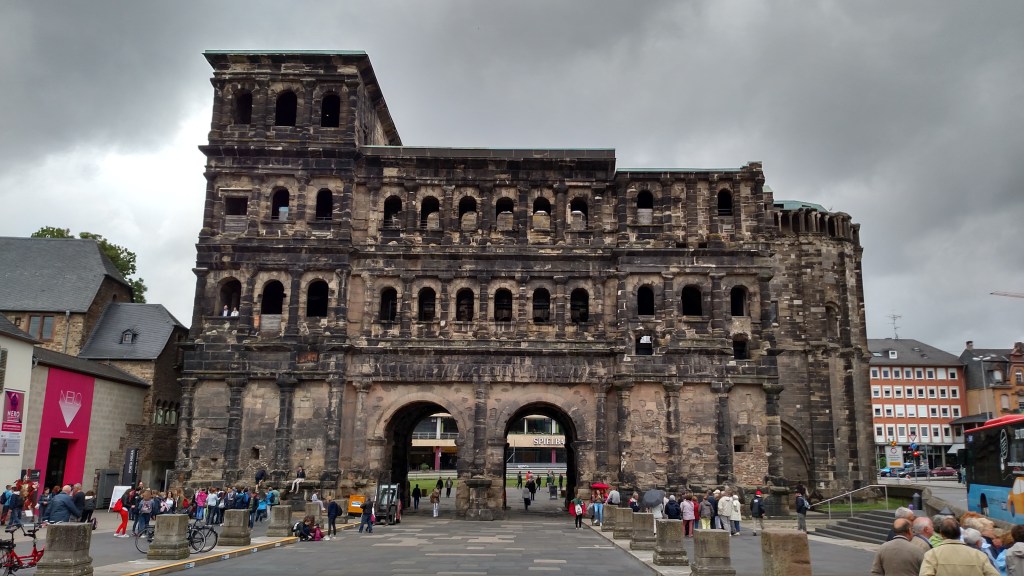
Built in the second century AD, the Porta Nigra was one of four city gates which guarded access to Augusta Treverorum. Of those four gates, only the Porta Nigra survives today. Its original Roman name, however, has not survived. Porta Nigra is a medieval name for the gate, referring to the darkened color of the stone.
During the Middle Ages, the Porta Nigra ceased being used as a city gate. In the 11th century, it was transformed into a church. The Porta Nigra continued as a church until the early 1800s, when Napoleon Bonaparte dissolved the church and ordered that the Porta Nigra be returned to its original appearance. Since the restoration ordered by Napoleon, the appearance of the Porta Nigra has not changed. Today, the Porta Nigra, along with the other Roman sites in Trier, is a UNESCO World Heritage Site. It is still in remarkably good condition, considering its age, and is open to visitors.
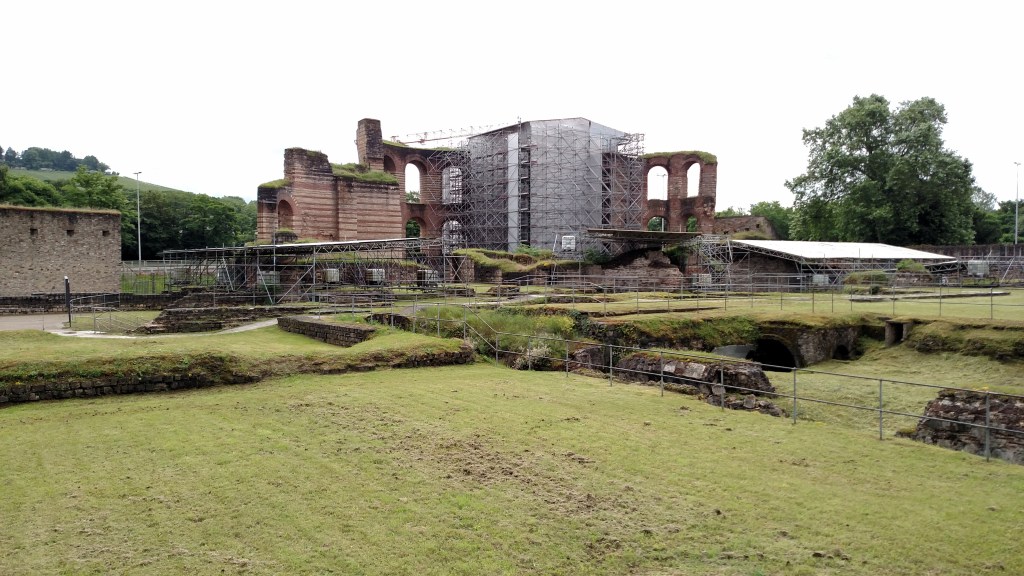
The Kaiserthermen (Imperial Baths) were built in the 4th century AD as a gift to the Emperor. The bath complex included a network of subterranean passages with furnaces for heating the baths. After the Romans left Augusta Treverorum, the Kaiserthermen were converted from their original purpose and used as a castle, a city wall, and a monastery. Excavations on the site began in the 19th century, revealing the remains of the Kaiserthermen. Today, you can visit the Kaiserthermen, learn about Roman Trier, appreciate the scale of the site, and even walk through the Roman passageways.
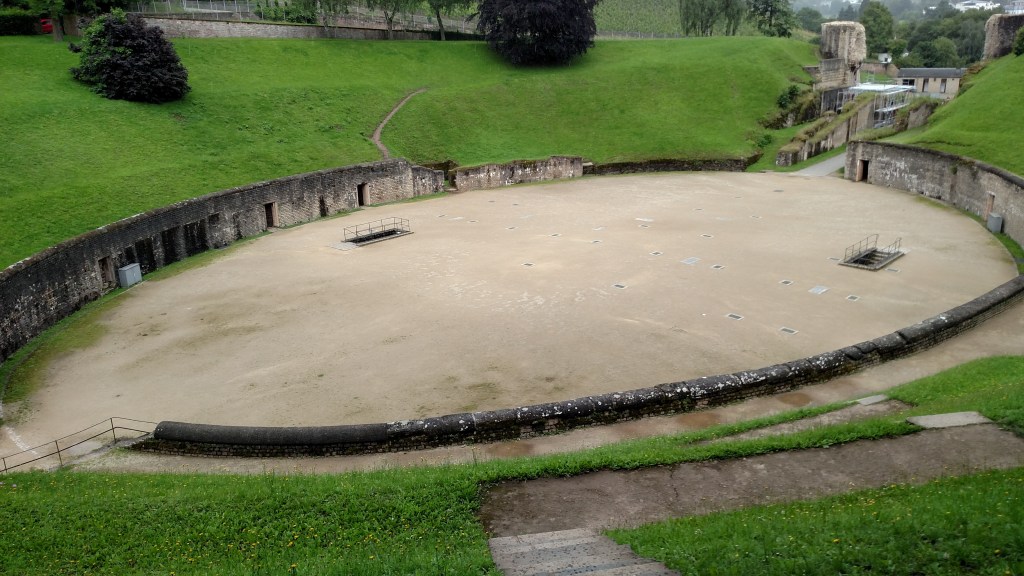

The Trier Amphitheater was built toward the end of the 2nd century AD. When the amphitheater was built, it was likely built into the city wall of Augusta Treverorum as a gate. The amphitheater could accommodate almost 20,000 spectators and had an underground cellar that was used to house animals and prisoners before the “show.” The entertainments at the Trier Amphitheater were similar to those on offer at the Colosseum in Rome: gladiator fights and fights between people and animals. However, bloody entertainments were not the only events held at the Trier Amphitheater, as it was also used for gatherings and religious festivals.

After the Roman period ended, the amphitheater fell out of use. From the 13th century, it was used by monks as a place to store materials; the walls and tiered seating areas were plundered for building stone, and the tiers were later planted with grapes for wine growing. In the 19th century, excavations of the amphitheater began, and the arena cellar was uncovered in 1908. Today, the amphitheater is a heritage site open to visitors (you can even go down into the cellar).


The Konstantinbasilika (Constantine Basilica), also known as the Aula Palatina, is a former Roman palace basilica. It was built as part of the palace complex in Augusta Treverorum around 310 AD by Emperor Constantine. During the Middle Ages, the basilica was converted into the residence of the Bishop of Trier. In the 1600s, the Archbishop-Elector of Trier built a new palace and incorporated the Konstantinbasilika into his palace complex.

Like so many of the Roman heritage sites in Trier, the Konstantinbasilika was restored to its original Roman appearance in the 19th century. In 1856, it became a Protestant church, which it still is today. After suffering damage during the Second World War, the Konstantinbasilika was restored, ensuring that this piece of Trier’s Roman heritage survived for the next generations.
As this tour has shown, Trier has an amazing amount of Roman heritage, much of which is very well preserved. If you’re interested in Roman history, architecture, or culture, Trier is a place to put on your travel bucket list. There is much more to see in Trier than just Roman sites – stay tuned for another post exploring this beautiful city!



 Making the Past Present
Leave a comment