
As someone who likes Art Nouveau architecture, I always enjoy visiting Vienna, because it has many excellent examples of this style of building. But what is Art Nouveau? Art Nouveau (also known as Jugendstil in German) is a style of art and architecture that was popular around the turn of the 20th century, roughly from 1890 to 1910. As a style of art and architecture, Art Nouveau was often inspired by nature, featuring motifs with flowers and other plants. Other major characteristics of Art Nouveau include a sense of movement and dynamism and the use of modern materials, including iron, glass, and concrete. Related to this use of new materials, many Art Nouveau artists, such as those of Vienna Secession (discussed below), tried to break down the traditional barrier between the visual arts and the applied arts (e.g., decorative arts, graphic design, etc.).
In the late 19th and early 20th centuries, Vienna was a major site of Art Nouveau art, architecture, and design. So where can you find examples of Art Nouveau architecture in Vienna today? Read on!
The Secession Building is an art exhibition building, originally constructed for the Vienna Secession, an art movement that was closely related to Art Nouveau/Jugendstil. The Vienna Secession was founded in 1897 by a group of Austrian painters, graphic artists, sculptors, and architects who broke away from the Association of Austrian Artists in protest over its rigid adherence to conservative styles. Prominent members of the Vienna Secession included painter Gustav Klimt, graphic designer and painter Koloman Moser, and architect Otto Wagner. The Secession Building, designed by Joseph Maria Olbrich, was intended to be a kind of architectural manifesto for the Secession movement, as well as provide space in which the movement’s members could exhibit their work.
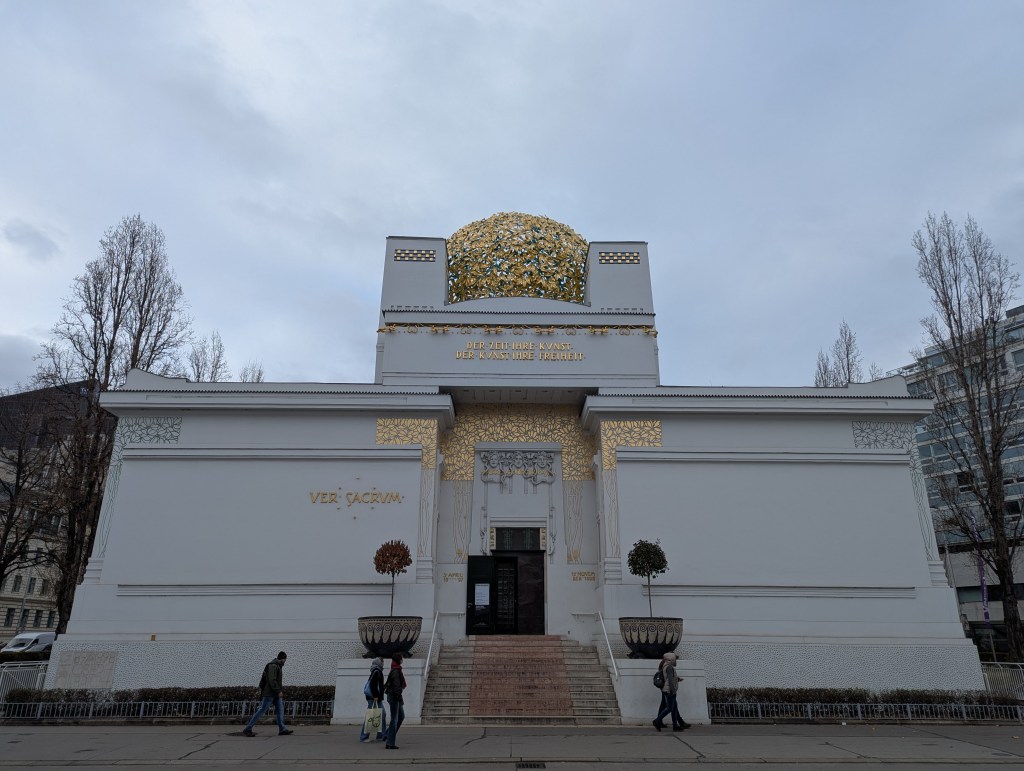
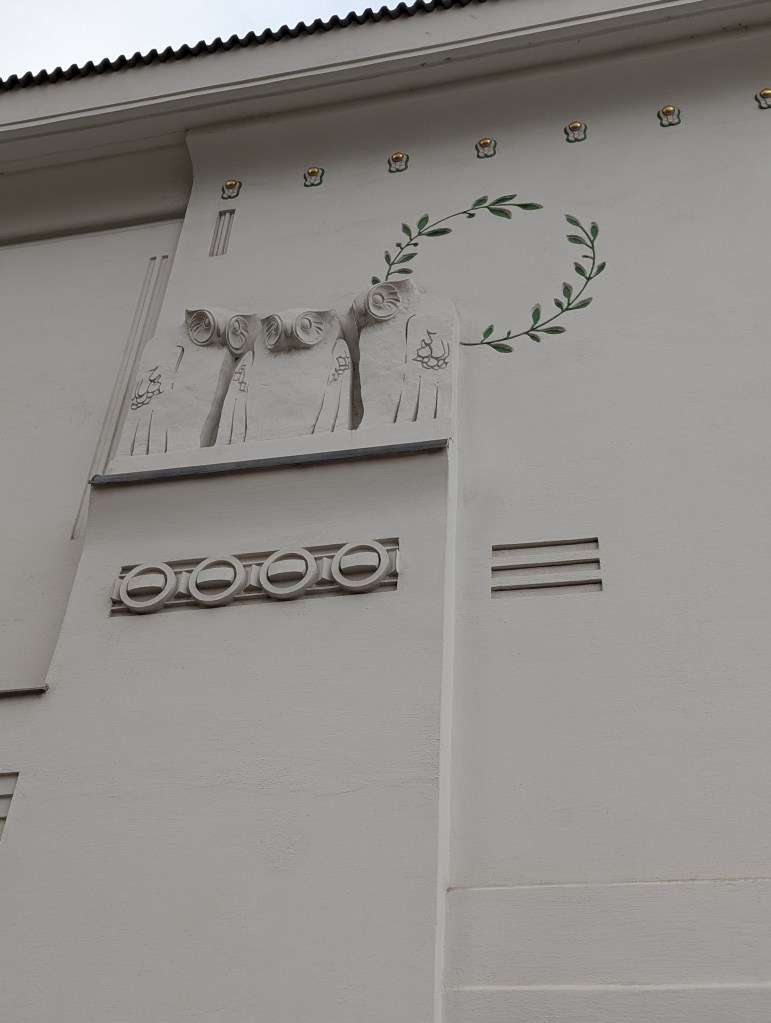
The Secession Building was very modern in style for its time, with stark white walls, gold accents around the main entrance, a green leaf motif on the sides of the building, and owl sculptures on the side of the building. I saw the building for the first time on my most recent trip to Vienna, and I was struck by how modern and different its architecture still is, especially compared to the many buildings in the city that are more traditional in style. The Secession Building is still used for art exhibitions today and also houses Klimt’s Beethoven Frieze, one of the most famous works of the Secession style. Unfortunately, the building was closing when I got there, so I wasn’t able to go inside and view the frieze.


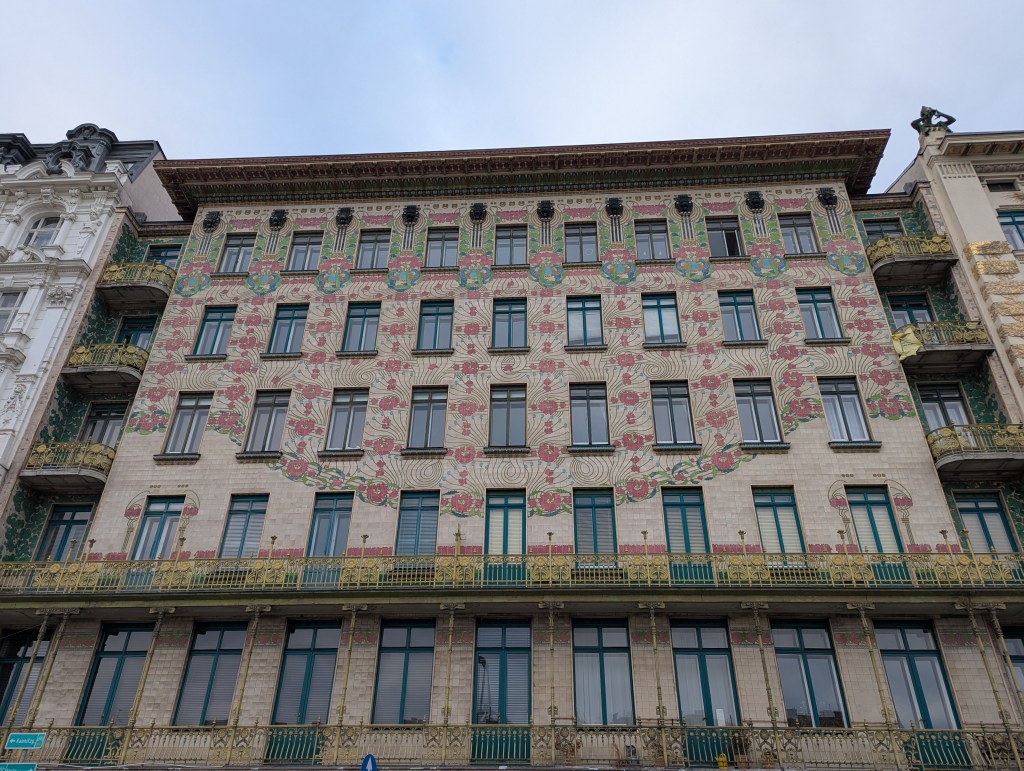
Two other famous Art Nouveau buildings in Vienna are the Linke Wienzeile buildings. These buildings are apartment buildings designed and constructed by architect Otto Wagner, a member of the Vienna Secession, in 1898-1899. They are located on Linke Wienzeile, near the Naschmarkt, a famous outdoor market in Vienna. Both of the Linke Wienzeile buildings have elaborate facades. The house at Linke Wienzeile 40 is known as the Majolica House, as the facade is entirely covered with majolica, or glazed earthenware tiles. The tiles create a floral pattern across the entire front facade of the building.

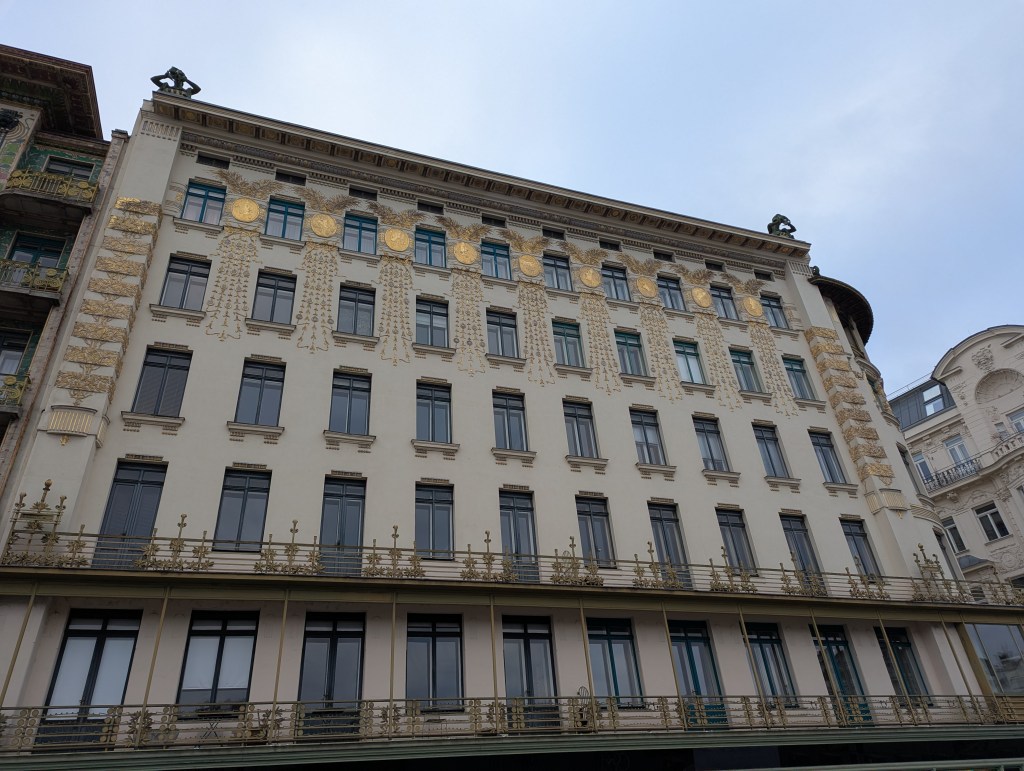
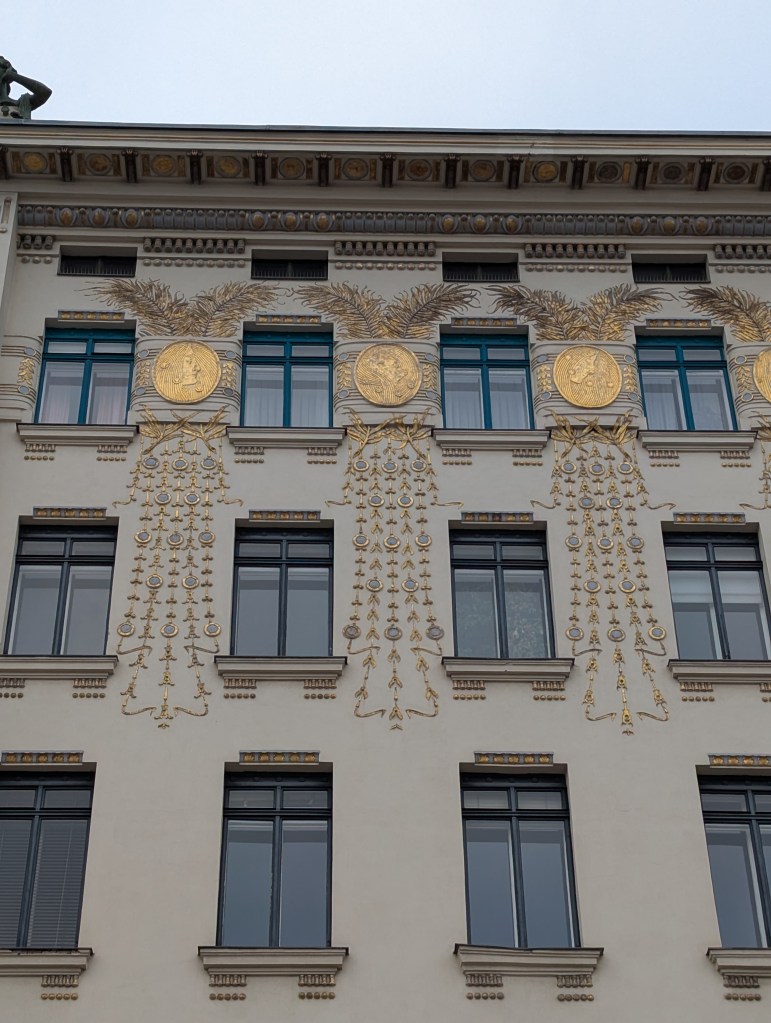
The house at Linke Wienzeile 38, right next door, is known as the Medallion House, as its facade features elaborate bronze medallions between the windows on the upper two floors of the building, as well as further bronze decorations along the sides of the facade.
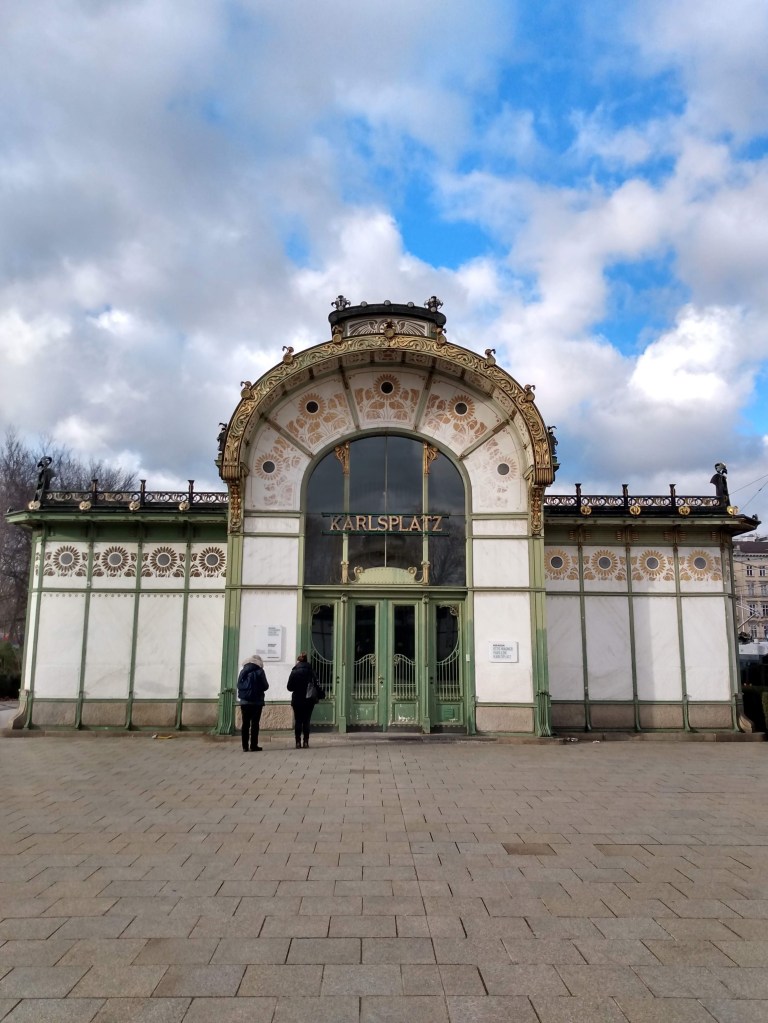
Another well-known example of Art Nouveau architecture in Vienna is the Karlsplatz Stadtbahn station, which was also designed by Otto Wagner and opened in 1899. The Stadtbahn was a precursor to today’s U-Bahn (or subway) in Vienna. The two buildings that comprise the Stadtbahn station at Karlsplatz were constructed in the style of the Vienna Secession. Like the Linke Wienzeile buildings, they feature floral decorations on the facade and gold accents around the central arch. When the Stadtbahn was converted to the U-Bahn in the 1980s, the Karlsplatz Stadtbahn station buildings were originally scheduled to be demolished. However, members of the public protested this decision, and, thankfully, the station buildings were preserved. It would have been a great architectural loss for Vienna if the buildings had been demolished.

One final example of Art Nouveau architecture and design in Vienna is not a building, but a clock. The Ankeruhr (or Anker Clock) is a large mechanical clock constructed by the Anker Insurance Company in 1914 in the Jugendstil/Art Nouveau style. It is located on Hoher Markt in central Vienna, not far from Stephansplatz (the center of the old city). Perhaps appropriately for a life insurance company, the clock features various motifs related to the passing of time, life, and death.

These examples of Art Nouveau architecture and design in Vienna only scratch the surface. If you would like to learn more about Art Nouveau/Jugendstil and the Vienna Secession while in Vienna, I recommend visiting the Leopold Museum, which has an extensive collection of paintings and objects related to prominent members of the Vienna Secession, including Koloman Moser, Otto Wagner, and Gustav Klimt. The best collection of Klimt paintings in Vienna is at the Belvedere Museum, which I’ve written about before (check it out here). In my personal opinion, there’s no better place in the German-speaking lands to discover Art Nouveau architecture than Vienna.



 Making the Past Present
Leave a reply to Jill Cancel reply